
Little Shop of Coral
Yellowfin Tang (Acanthurus xanthopterus)
Yellowfin Tang (Acanthurus xanthopterus)
Couldn't load pickup availability
Yellow Fin Tang
Acanthurus xanthopterus
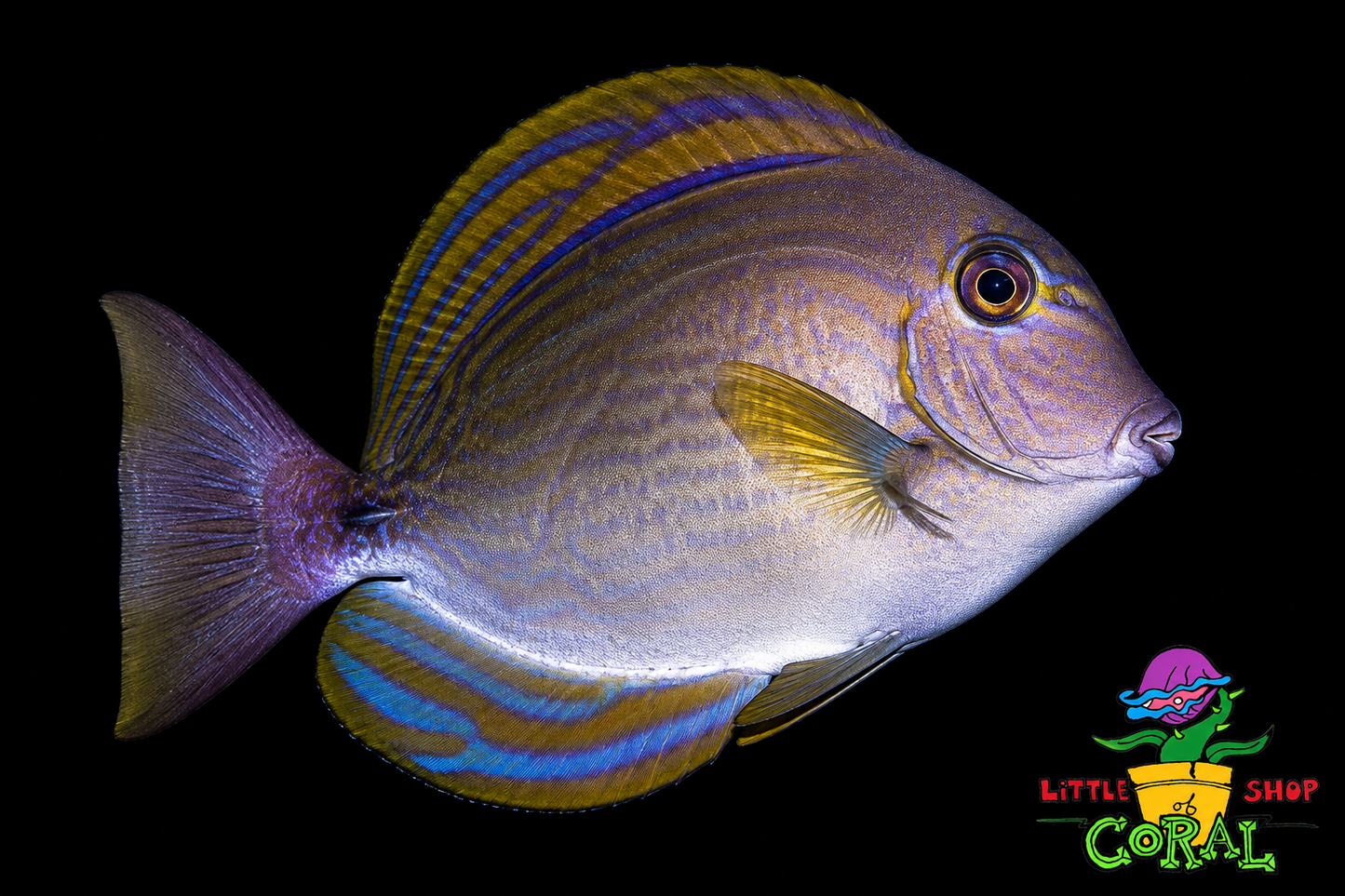
The Yellow Fin Tang is a large, impressive surgeonfish that makes a fantastic centrepiece for a properly sized reef aquarium. With its silver-grey body, yellow pectoral fins, and distinctive blue and yellow markings around the face and fins.
Unlike some of the smaller tang species, the Yellow Fin Tang can grow quite large and is a very active swimmer. It needs a spacious, mature aquarium with plenty of open swimming room, strong circulation, and established rockwork to explore and graze on.
Care & Temperament
-
Difficulty: Intermediate
-
Temperament: Generally peaceful but can become territorial
-
Adult Size: Grows up to 20 to 24 inches (50–60 cm) in length.
-
Minimum Aquarium: 180+ gallons recommended
-
Swimming Level: Throughout the aquarium
-
Activity: Very active
Yellow Fin Tangs are best suited to larger, established aquariums. They spend much of their day swimming through the rockwork and grazing, so plenty of swimming space is important, while they are generally peaceful with most community reef fish they may become territorial toward other surgeonfish, especially after establishing a territory.
Diet
The Yellow Fin Tang is primarily an herbivore and should have regular access to marine algae. A varied diet will help maintain good colour, body condition, and overall health.
We recommend feeding:
-
Nori and other marine algae
-
Spirulina-based foods
-
High-quality herbivore pellets
-
Marine flakes
-
Frozen foods as part of a varied diet
Offering algae regularly is especially important for tangs and helps encourage their natural grazing behaviour.
Tankmates & Compatibility
Yellow Fin Tangs can work well in a community reef aquarium when housed with appropriately sized tankmates. They are generally peaceful toward fish that don't compete directly for territory.
Good tankmates include:
-
Clownfish
-
Wrasses
-
Gobies
-
Blennies
-
Anthias
-
Cardinalfish
-
Larger peaceful reef fish
Use caution with:
-
Other tangs and surgeonfish
-
Similar-looking or similarly shaped fish
-
Adding new fish after the tang has established its territory
In larger aquariums, careful stocking and plenty of rockwork can help reduce territorial behaviour.
Reef Safe
Yes — Reef Safe
Yellow Fin Tangs are excellent reef inhabitants and generally leave corals and ornamental invertebrates alone. Their natural grazing behaviour can also be helpful for keeping algae under control.
Suggested Parameters
-
Temperature: 24–27°C (75–81°F)
-
Salinity: 1.024–1.026
-
pH: 8.0–8.4
-
Alkalinity: 7–11 dKH
-
Ammonia: 0 ppm
-
Nitrite: 0 ppm
-
Nitrate: Ideally below 10–20 ppm
-
Phosphate: Ideally below 0.1 ppm
Stable water quality, good oxygenation, and strong circulation are important for this active species.
What You Are Buying
You are purchasing one Yellow Fin Tang (Acanthurus xanthopterus). Size, colouration, and markings can vary between individual fish.
Health & Acclimation Notes
Tangs can be sensitive to stress and poor water quality, particularly when first introduced. Give your new Yellow Fin Tang a calm acclimation and plenty of hiding places while it settles in.
-
Acclimate carefully to your aquarium's temperature and salinity.
-
Provide established rockwork for grazing and shelter.
-
Offer algae soon after introduction.
-
Avoid adding a tang to a newly established aquarium.
-
Monitor closely for signs of stress or disease during the first few weeks.
Why We Love It
The Yellow Fin Tang is a great choice for the experienced reef keeper looking for something a little different. Its large size, active swimming style, and unique yellow and blue markings make it a real standout fish. Once established, it becomes a confident and constantly active member of the reef and is sure to draw attention every time someone looks into the tank.
Collapsible content
LIGHT
LOW: Place coral at the bottom of the tank. Depending on the type, coral may need to be placed off sand and therefore mounted on a ceramic disc of piece of rock.
MEDIUM: Place coral at mid-range of the tank. Best placed/glued on top of a rock scape at mid-range height.
HIGH: Place coral from mid range to just below water level. SPS coral are shallow growing so they require and are able to tolerate intense light.
FLOW
LOW: Most soft coral do well with a small, gentle pulse. There are certain corals that can even be placed in areas of indirect flow, meaning places aside a rock structure or set into a entrance to a cave style space.
MEDIUM: Many LPS types of coral prefer medium pulse current. Most Euphyllia or corals that have more tissue structure connected to their skeleton, don’t like to be in a high flow area like the direct flow of the wave pump.
HIGH: Similar to high light, SPS enjoy being in some heavy current. Most LPS and SPS that branch encrust or plate prefer high flow that simulates the top water waves.
SKILL
ENTRY: While some may say beginner level, "Entry" is a good term to be used when starting out in the world of corals and marine life. Prior to adding livestock, you want to ensure that your reef has the proper parameters including zero levels of ammonia and nitrite. Seeing traces of nitrate in your waters is a good sign - just keep them at a lower level of 2ppm to 10ppm. Maintaining correct temperature and salinity are a huge factor to stable parameters. Starting to monitor your PH, alkalinity, calcium and magnesium is a great habit to get into to keep a successful reef.
While some soft coral don’t require too much light, having a proper reef light that puts out the proper pars is very important. You'll also want to have a good amount of flow and protected rock areas, as placing corals in their happy spot is ideal for success.
ADVANCED: