
Little Shop of Coral
Trochus Snail (Trochus maculatus)
Trochus Snail (Trochus maculatus)
Couldn't load pickup availability
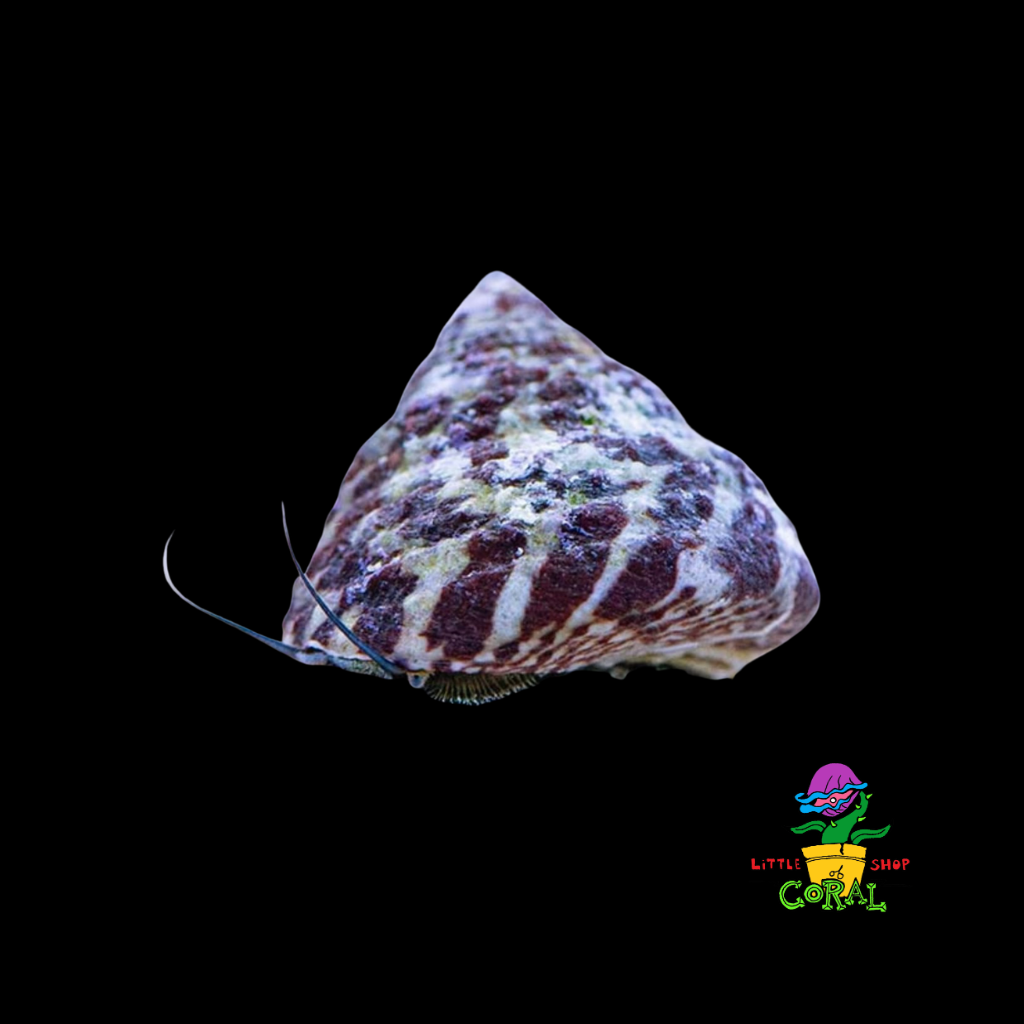
Trochus snails are one of the most valuable and reliable members of any reef cleanup crew, and for good reason. These voracious herbivores consume a wide range of nuisance growth including film algae, diatoms, and some hair algae, playing a key role in nutrient control by eating algae before it can decay and fuel further problems. Their distinctive cone-shaped shell, banded in maroon, silver, and pale grey tones, adds genuine visual interest to the aquascape, but what makes them truly stand out as a cleanup crew choice is a combination of relentless grazing performance, genuine hardiness, and one unique advantage no other popular reef snail can claim: they can right themselves if knocked over, a significant advantage over many other snail species that require constant intervention when flipped.
Why we love them
- Tireless algae grazers that work rockwork, glass, and equipment surfaces around the clock
- Hardy and long-lived, often several years with good care, making them suitable for beginners and experienced reefers alike
- Self-righting ability means far less hands-in-the-tank intervention compared to turbo or astrea snails
- Known to spawn in aquarium environments, which is both fascinating to observe and a potential bonus for expanding your cleanup crew naturally
- Fully reef safe and compatible with corals of all types
Suggested parameters
- Temperature: 24 to 26°C (75 to 79°F)
- Salinity: 1.025 to 1.026 SG
- pH: 8.1 to 8.4
- Alkalinity: 8 to 10 dKH
- Calcium: 400 to 450 ppm (important for healthy shell growth)
- Magnesium: 1250 to 1400 ppm
- Nitrate: Under 20 ppm
- Phosphate: 0.03 to 0.12 ppm
- Copper-based medications are toxic to Trochus and all invertebrates and must never be used in a system housing them
Care
- Difficulty: Easy
- Reef safe: Yes, completely safe with all coral types and most ornamental invertebrates
- Minimum tank size: 20 gallons
- Trochus snails stick to hard surfaces, working rocks, glass, and overflow boxes; they typically avoid the sandbed and can be complemented nicely by cerith snails, which cover lower glass and substrate zones
- Maintaining proper calcium, alkalinity, and magnesium levels is important for healthy shell growth and long-term vitality
- A well-established system with a healthy existing algae crop is ideal; a new, sterile tank may not have enough natural food to support them
Feeding
Trochus snails are self-sufficient grazers in most established reef systems and require little to no supplemental feeding under normal conditions.
- Once snails have significantly reduced available algae, diet should occasionally be supplemented with an algae wafer or two dropped in during evening hours
- Nori sheets clipped to the glass or rockwork are also accepted
- They will also feed on leftover fish and shrimp food that drifts to lower surfaces
Stocking and compatibility
- One per five to ten gallons is a good starting density, adjusted based on degree of algal fouling and desired pace of cleanup
- Completely peaceful with fish, corals, and most ornamental invertebrates
- Be cautious of predators such as pufferfish, triggers, and large aggressive hermit crabs, which may target Trochus snails or attempt to steal their shells
- Larger individuals can accidentally dislodge frags and unsecured corals while moving through the aquascape; gluing frags and corals to the rockwork prevents incidents
Health and acclimation notes
Trochus snails are sensitive to rapid salinity and parameter shifts during acclimation. The acclimation process should be slow, close to 1.5 hours, roughly twice the time you would spend acclimating a fish. Drip acclimation is the recommended method. Healthy snails are active grazers with intact, unblemished shells; excellent water quality and stable calcium supplementation can support natural shell repair if minor damage is noted. Never use copper-based medications in any system housing snails or other invertebrates.
What you are buying
- You will receive: Trochus spp. cleanup crew snails
- Shell colour and banding can vary between individuals and species; the foot is characteristically black with a pale underside
- Quantity per order as listed
Drip acclimation is strongly recommended. Do not expose to copper-based medications or sudden parameter swings.
Collapsible content
LIGHT
LOW: Place coral at the bottom of the tank. Depending on the type, coral may need to be placed off sand and therefore mounted on a ceramic disc of piece of rock.
MEDIUM: Place coral at mid-range of the tank. Best placed/glued on top of a rock scape at mid-range height.
HIGH: Place coral from mid range to just below water level. SPS coral are shallow growing so they require and are able to tolerate intense light.
FLOW
LOW: Most soft coral do well with a small, gentle pulse. There are certain corals that can even be placed in areas of indirect flow, meaning places aside a rock structure or set into a entrance to a cave style space.
MEDIUM: Many LPS types of coral prefer medium pulse current. Most Euphyllia or corals that have more tissue structure connected to their skeleton, don’t like to be in a high flow area like the direct flow of the wave pump.
HIGH: Similar to high light, SPS enjoy being in some heavy current. Most LPS and SPS that branch encrust or plate prefer high flow that simulates the top water waves.
SKILL
ENTRY: While some may say beginner level, "Entry" is a good term to be used when starting out in the world of corals and marine life. Prior to adding livestock, you want to ensure that your reef has the proper parameters including zero levels of ammonia and nitrite. Seeing traces of nitrate in your waters is a good sign - just keep them at a lower level of 2ppm to 10ppm. Maintaining correct temperature and salinity are a huge factor to stable parameters. Starting to monitor your PH, alkalinity, calcium and magnesium is a great habit to get into to keep a successful reef.
While some soft coral don’t require too much light, having a proper reef light that puts out the proper pars is very important. You'll also want to have a good amount of flow and protected rock areas, as placing corals in their happy spot is ideal for success.
ADVANCED: