

Little Shop of Coral
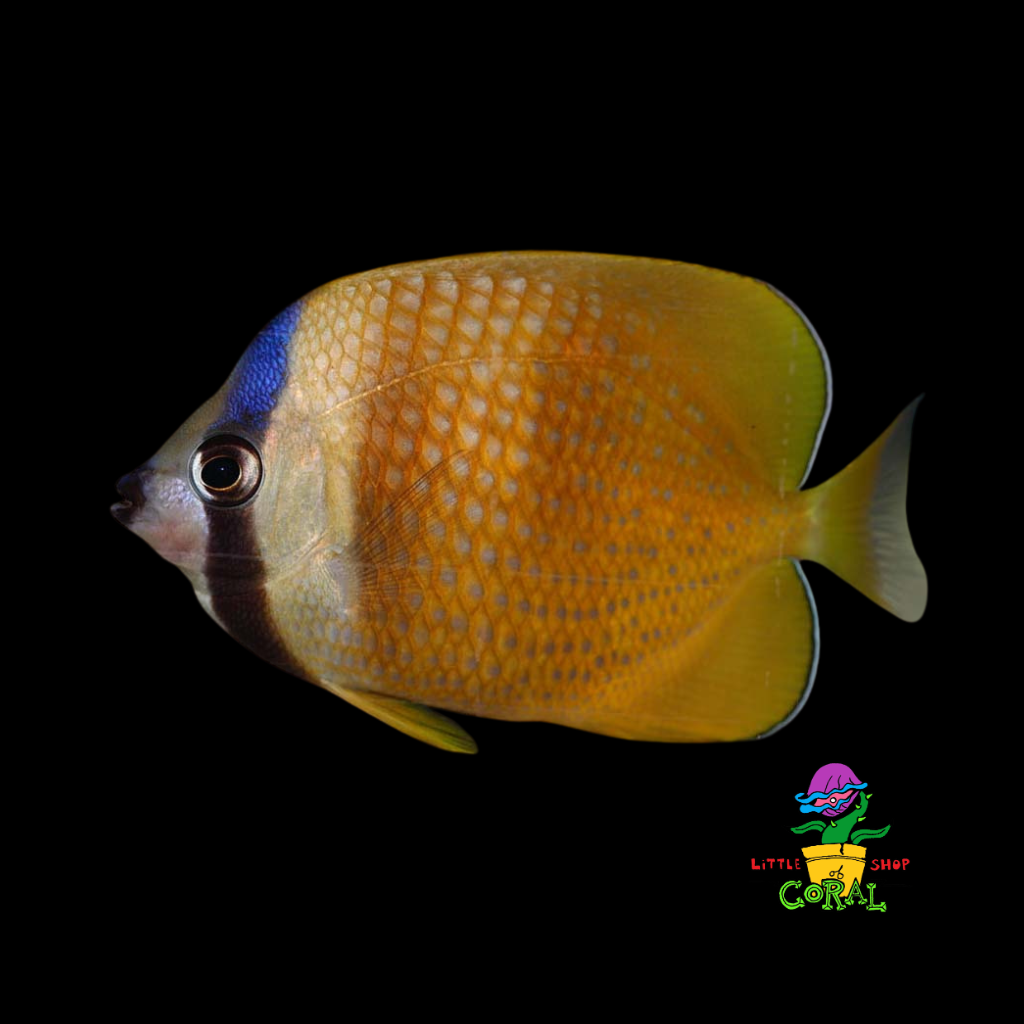
Sunburst Butterflyfish (Chaetodon kleinii)
Sunburst Butterflyfish (Chaetodon kleinii)
Couldn't load pickup availability
The Sunburst Butterflyfish is one of the most underrated fish in the hobby and one of the very few butterflies that genuinely earns the description beginner-friendly. Its golden-yellow body carries a pale front section, a bold dark vertical bar running through the eye, distinctively dark lips, and blue iridescence edging the dorsal, caudal, and anal fins, producing a colour palette that stands out beautifully against reef rockwork under any lighting. Also known as Klein's Butterflyfish, the Orange Butterflyfish, and the Blacklip Butterflyfish, C. kleinii is a not-too-picky feeder, a good shipper, active and intelligent, and one of the most adaptable members of a family that is otherwise notorious for demanding care. For hobbyists who have always wanted a butterflyfish but been put off by the typical challenges of the group, this is the species to start with.
Why we love it
- Considered one of the most durable members of the butterflyfish family, with a strong record in both public and private aquarium systems
- Warm golden-yellow colouration with striking facial markings and iridescent fin edging that pops under reef lighting
- Unlike most butterflyfishes, C. kleinii gets along with others of its own species and can be kept in groups when introduced simultaneously
- Known to consume Aiptasia anemones, making it a useful addition to systems struggling with pest anemone outbreaks
- Active, curious, and intelligent, quickly learns feeding routines and recognizes its keeper
Suggested parameters
- Temperature: 24 to 26°C (75 to 79°F)
- Salinity: 1.025 to 1.026 SG
- pH: 8.1 to 8.4
- Alkalinity: 8 to 10 dKH
- Ammonia/Nitrite: 0
- Nitrate: Under 20 ppm; stable, mature water chemistry is strongly preferred
- Strong oxygenation and efficient filtration recommended; butterflyfishes do best in clean, well-maintained systems
Care and temperament
- Difficulty: Moderate (hardy for a butterflyfish, but still requires a mature system and stable parameters)
- Temperament: Peaceful; can be kept with other butterflyfish of its own and different species, and even alongside moderately assertive species as long as it is introduced to the aquarium first
- Reef safe: With caution (will nip at soft coral polyps, particularly Litophyton and Sarcophyton species, and may consume small ornamental tubeworms; best kept in systems with noxious or less palatable soft coral species, or in fish-only and FOWLR setups; generally leaves LPS and SPS corals alone)
- Minimum tank size: 280 litres (75 gallons) for a single specimen; larger is preferred
- A well-established aquarium with lots of open swimming space, live rock for hiding, and existing algae growth gives this fish the best start
Diet
C. kleinii is considered one of the most adaptable feeders in the butterflyfish family, browsing filamentous algae, zooplankton, and soft coral polyps in the wild; in captivity it typically accepts a wide range of foods readily.
- Frozen mysis shrimp (staple)
- Frozen brine shrimp and enriched artemia
- Marine algae-based frozen foods and spirulina flakes
- Nori and dried seaweed sheets
- Quality omnivore pellets once established
- If reluctant to feed initially, small clams or black mussels on the half-shell placed in the tank will often entice a feeding response; frozen mysis and brine shrimp are typically accepted readily once the fish has settled in
- Feed two to three times daily; multiple small feedings support this active species better than a single large meal
Compatibility and tankmates
- Excellent with tangs, larger wrasses, angelfish, gobies, blennies, dartfish, and most peaceful to moderately assertive reef fish
- One of the few butterflyfishes that can be successfully kept in groups; introduce all individuals simultaneously for the best outcome
- Ideally introduced to the aquarium before any more assertive species; new additions introduced to a tank with an established fish of this species may experience minor bullying
- Not suitable for reef tanks with prized soft corals, ornamental tubeworms, or Aiptasia that the keeper intends to preserve
- Avoid aggressive triggerfish, large puffers, and dominant species that may stress this peaceful fish
Health and acclimation notes
As with all butterflyfishes, the Sunburst Butterfly benefits from a well-established system with stable parameters, and quarantine before introduction to a display tank is always encouraged. This species is notably more tolerant of the stress of shipping and acclimation than most of its family, but slow drip acclimation remains best practice. Watch for common marine parasites such as ich and marine velvet during the first few weeks, and ensure the fish is feeding actively within the first few days of introduction. A varied, protein-rich diet fed frequently is the single most important factor in long-term health and colouration.
What you are buying
- You will receive: 1 Sunburst Butterflyfish (Chaetodon kleinii)
- Colouration can vary slightly between individuals and collection regions; the dark lip marking, vertical eye bar, and golden body are consistent identifying features across the species
Slow acclimation is recommended. Quarantine before introduction to your display is encouraged.
Collapsible content
LIGHT
LOW: Place coral at the bottom of the tank. Depending on the type, coral may need to be placed off sand and therefore mounted on a ceramic disc of piece of rock.
MEDIUM: Place coral at mid-range of the tank. Best placed/glued on top of a rock scape at mid-range height.
HIGH: Place coral from mid range to just below water level. SPS coral are shallow growing so they require and are able to tolerate intense light.
FLOW
LOW: Most soft coral do well with a small, gentle pulse. There are certain corals that can even be placed in areas of indirect flow, meaning places aside a rock structure or set into a entrance to a cave style space.
MEDIUM: Many LPS types of coral prefer medium pulse current. Most Euphyllia or corals that have more tissue structure connected to their skeleton, don’t like to be in a high flow area like the direct flow of the wave pump.
HIGH: Similar to high light, SPS enjoy being in some heavy current. Most LPS and SPS that branch encrust or plate prefer high flow that simulates the top water waves.
SKILL
ENTRY: While some may say beginner level, "Entry" is a good term to be used when starting out in the world of corals and marine life. Prior to adding livestock, you want to ensure that your reef has the proper parameters including zero levels of ammonia and nitrite. Seeing traces of nitrate in your waters is a good sign - just keep them at a lower level of 2ppm to 10ppm. Maintaining correct temperature and salinity are a huge factor to stable parameters. Starting to monitor your PH, alkalinity, calcium and magnesium is a great habit to get into to keep a successful reef.
While some soft coral don’t require too much light, having a proper reef light that puts out the proper pars is very important. You'll also want to have a good amount of flow and protected rock areas, as placing corals in their happy spot is ideal for success.
ADVANCED: