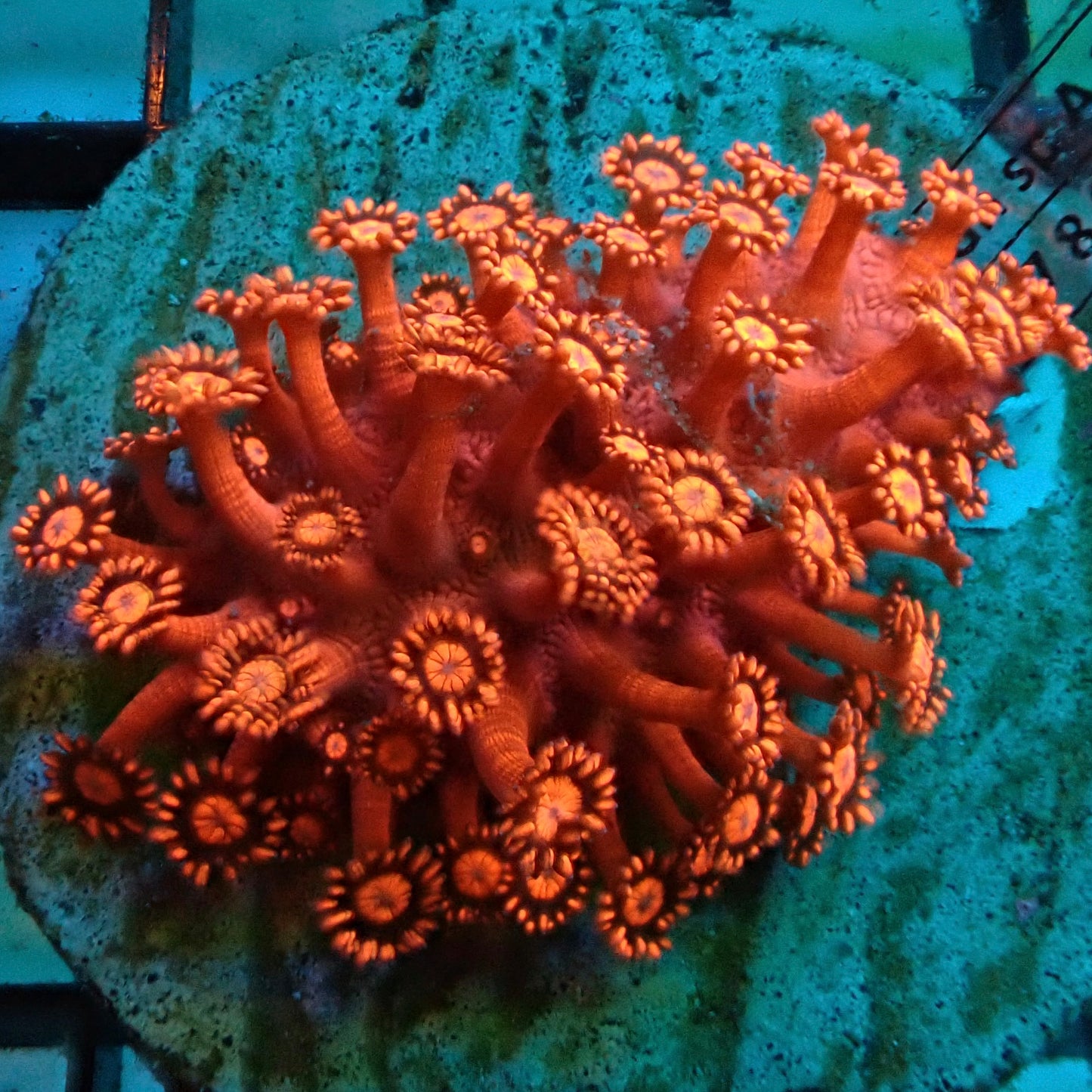

Red Goniopora is a high-motion LPS with long polyps and constant, flower-like extension that adds life to the reef. The red colour can range from deep cherry to bright red depending on lighting and nutrients, and under blue lighting it often shows strong fluorescence and rich tone. With stable parameters, moderate nutrients, and the right flow, goniopora can become a favourite centrepiece coral that just keeps extending.
Why we love it
-
Long, flowing polyp extension and constant movement
-
Rich red colour that stands out in mixed reefs
-
A premium showpiece coral for stable, nutrient-balanced systems
Suggested parameters
-
Temperature: 24–26°C (75–79°F)
-
Salinity: 1.025–1.026 SG
-
pH: 8.1–8.4
-
Alkalinity: 8–9 dKH (keep it stable)
-
Calcium: 420–460 ppm
-
Magnesium: 1300–1400 ppm
-
Nitrate: 5–15 ppm
-
Phosphate: 0.03–0.10 ppm
Care and placement
-
Difficulty: Moderate
-
Placement: Sandbed or low to mid rockwork where it can fully extend
-
Lighting: Low to moderate (acclimate slowly if moving higher)
-
Flow: Low to moderate, indirect and random (enough to keep polyps moving, not enough to keep them pinned)
Feeding
Helpful and often recommended, especially in cleaner systems. Goniopora can benefit from smaller foods more frequently.
-
Feed fine particulate foods, powdered coral foods, and small zooplankton 2 to 4 times per week
-
Turn down flow during feeding so food can settle into the polyps
-
Keep nutrients stable, goniopora often struggles in ultra-low nutrient tanks
Compatibility and spacing
Goniopora is generally peaceful but can still sting, and it can be irritated by aggressive neighbours.
-
Leave 10–15 cm (4–6 in.) of space from aggressive LPS and sweepers
-
Avoid nippy fish that pick at polyps
-
Generally compatible with reef safe fish and inverts
What you are buying (2 to 3" frag)
This listing is for a 2 to 3 inch frag, meaning you are purchasing one frag sized approximately 2 to 3 inches.
-
You will receive: 1 frag (2 to 3") of Red Goniopora Coral
-
Mounted on a frag plug or small base (unless otherwise stated)
Colour and extension can vary by system and may shift during acclimation due to lighting, flow, nutrient levels, and tank maturity.