

Little Shop of Coral
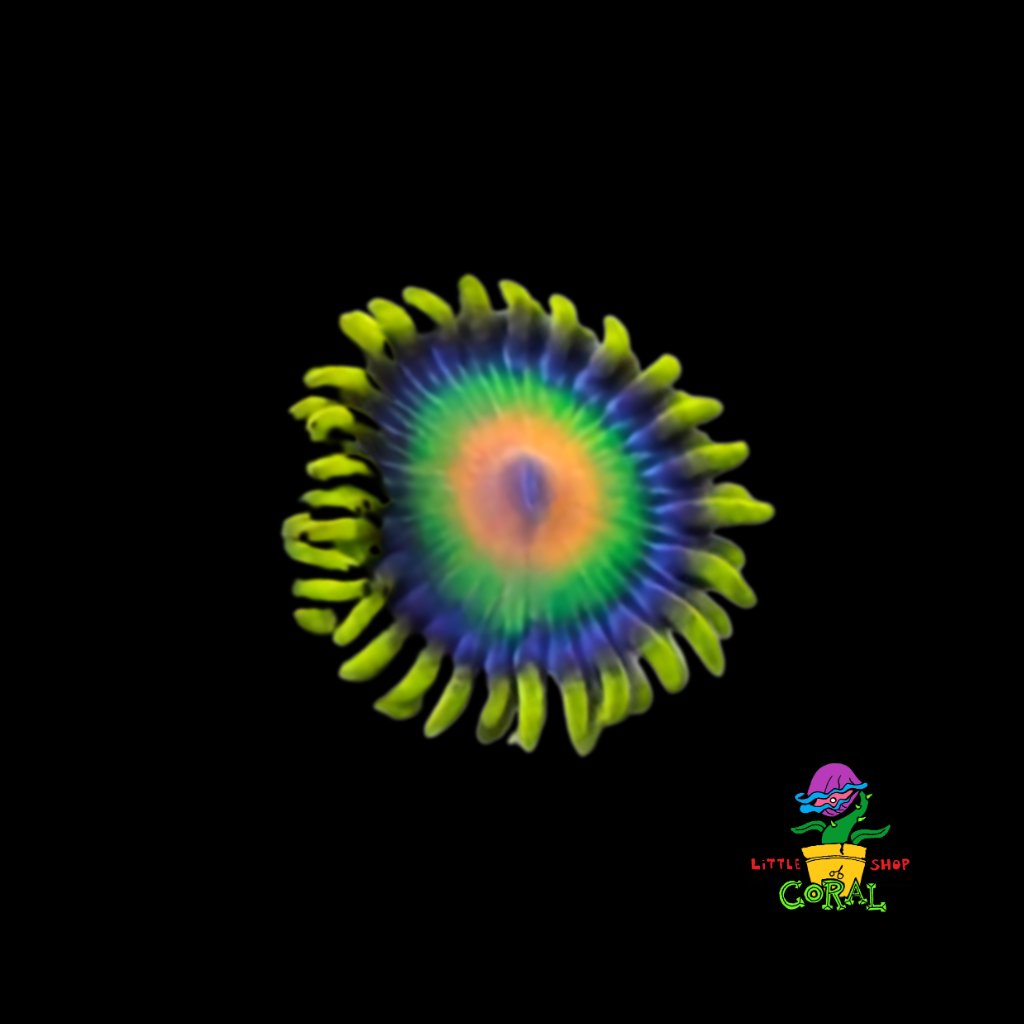
Rasta Zoanthids (Zoanthus sp.) (B20)
Rasta Zoanthids (Zoanthus sp.) (B20)
Couldn't load pickup availability
Zoanthids are one of the most beloved and collected corals in the reef hobby, and it is not difficult to understand why. Compact, fast-growing, endlessly variable in colour, and genuinely forgiving of a wide range of water conditions, they offer something for every level of experience and every budget. Whether you are building your first frag rack or hunting down the next piece for a serious zoa garden, these corals deliver immediate visual impact and long-term satisfaction in equal measure. Each polyp is a tiny, disc-shaped flower that opens fully under good conditions to reveal a vivid pattern of rings, halos, and contrasting colours, and no two morphs are exactly alike. Under blue and actinic lighting the effect is spectacular, with colours that fluoresce in ways that photographs rarely do justice.
Why we love them
- Extraordinary colour diversity spanning every part of the spectrum, from electric neons to deep jewel tones to subtle two-tone patterns that reward close observation
- Fast, reliable growth in stable conditions; established colonies spread steadily and produce frags easily, making them ideal for trading and sharing within the hobby
- Hardy and adaptable across a broad range of parameters, among the most forgiving corals available for developing reefers
- Fully compatible with most reef fish and invertebrates and able to coexist in a crowded frag rack or aquascape without specialist care
- One of the most collectible coral groups in the hobby, with an entire community built around hunting, naming, and growing rare and unusual colour morphs
Suggested parameters
- Temperature: 24 to 26°C (75 to 79°F)
- Salinity: 1.025 to 1.026 SG
- pH: 8.1 to 8.4
- Alkalinity: 8 to 10 dKH (stability matters most)
- Calcium: 400 to 450 ppm
- Magnesium: 1250 to 1400 ppm
- Nitrate: 5 to 20 ppm
- Phosphate: 0.03 to 0.12 ppm
Care and placement
- Difficulty: Easy to moderate
- Placement: Lower to mid rockwork, frag racks, sandbed islands, or open rubble zones; avoid placing directly against aggressive sweepers
- Lighting: Low to moderate; acclimate slowly to higher light to prevent bleaching or browning; most morphs show their best colour under blue-heavy or mixed spectrum lighting
- Flow: Low to moderate; enough to keep polyps clean and prevent detritus settling between them, but not so strong that polyps cannot open fully
Feeding
Not required, but optional feeding supports faster growth and enhanced colour.
- Fine coral foods, reef roids style powders, or phytoplankton broadcast once or twice per week
- Turn pumps down before feeding and resume flow after 10 to 15 minutes to allow polyps to feed
Compatibility and spacing
Zoanthids are generally peaceful but will compete for space over time.
- Leave room between morphs if you want to maintain clean borders between colonies; zoas will grow into and over neighbouring frags if left unchecked
- Keep away from aggressive sweeper corals including torches, hammers, favias, and other large LPS that will sting and kill zoa polyps at the colony's edge
- Most reef safe fish and invertebrates are compatible, though some fish, including certain butterflyfish and wrasses, may nip at polyps
Important handling note
Zoanthids and palythoas can contain palytoxin, one of the most potent naturally occurring toxins known. Always wear gloves and eye protection when fragging, handling, or working near colonies, and wash hands and all tools thoroughly after contact. Avoid any situation where the coral tissue could be aerosolized, such as cutting under running water or near a fan. If you have open cuts on your hands, double-glove. Take this seriously every time, no exceptions.
What you are buying
- You will receive a zoanthid frags with 3-6 polyps
- Colour and polyp size can vary between systems and may shift during acclimation as the coral adjusts to new lighting, flow, and nutrient levels; this is normal and colours typically stabilize and intensify once the colony is fully settled
Collapsible content
LIGHT
LOW: Place coral at the bottom of the tank. Depending on the type, coral may need to be placed off sand and therefore mounted on a ceramic disc of piece of rock.
MEDIUM: Place coral at mid-range of the tank. Best placed/glued on top of a rock scape at mid-range height.
HIGH: Place coral from mid range to just below water level. SPS coral are shallow growing so they require and are able to tolerate intense light.
FLOW
LOW: Most soft coral do well with a small, gentle pulse. There are certain corals that can even be placed in areas of indirect flow, meaning places aside a rock structure or set into a entrance to a cave style space.
MEDIUM: Many LPS types of coral prefer medium pulse current. Most Euphyllia or corals that have more tissue structure connected to their skeleton, don’t like to be in a high flow area like the direct flow of the wave pump.
HIGH: Similar to high light, SPS enjoy being in some heavy current. Most LPS and SPS that branch encrust or plate prefer high flow that simulates the top water waves.
SKILL
ENTRY: While some may say beginner level, "Entry" is a good term to be used when starting out in the world of corals and marine life. Prior to adding livestock, you want to ensure that your reef has the proper parameters including zero levels of ammonia and nitrite. Seeing traces of nitrate in your waters is a good sign - just keep them at a lower level of 2ppm to 10ppm. Maintaining correct temperature and salinity are a huge factor to stable parameters. Starting to monitor your PH, alkalinity, calcium and magnesium is a great habit to get into to keep a successful reef.
While some soft coral don’t require too much light, having a proper reef light that puts out the proper pars is very important. You'll also want to have a good amount of flow and protected rock areas, as placing corals in their happy spot is ideal for success.
ADVANCED: