

Little Shop of Coral
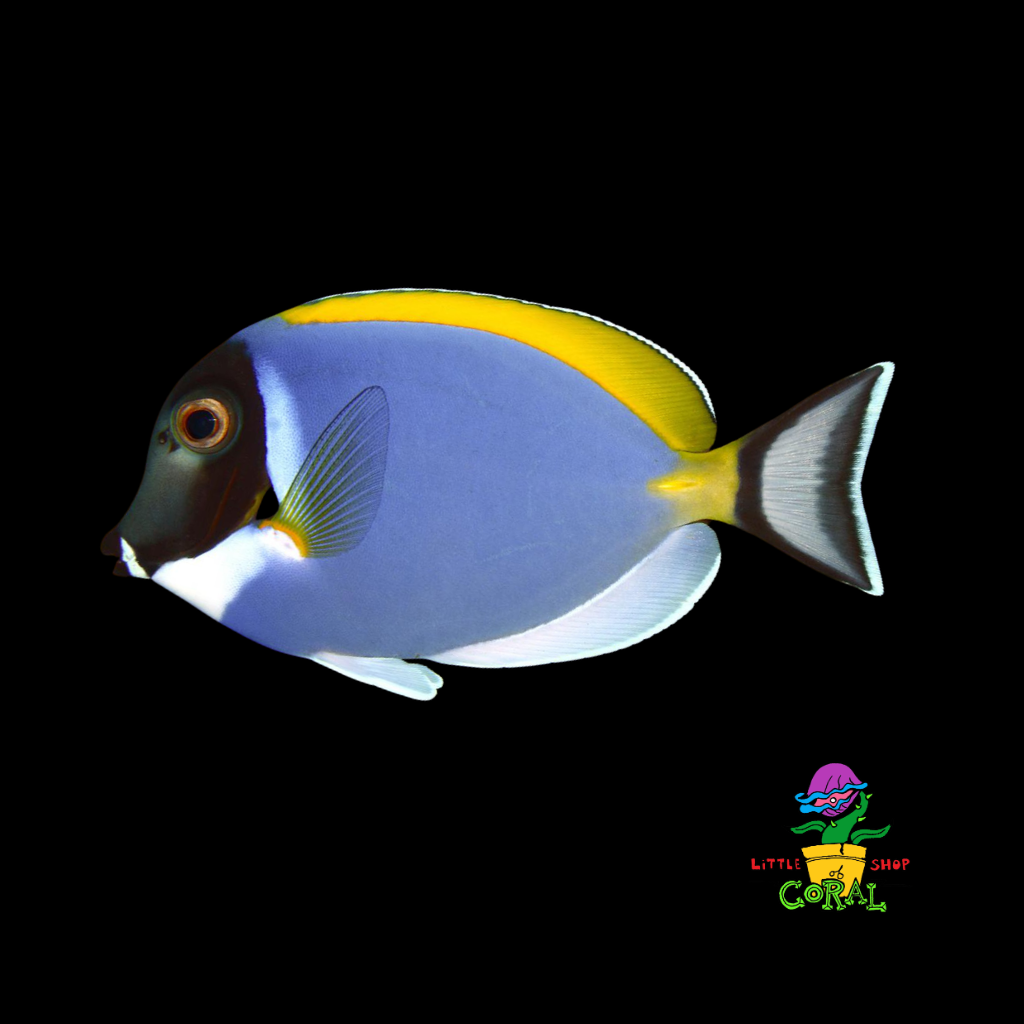
Powder Blue Tang (Acanthurus leucosternon)
Powder Blue Tang (Acanthurus leucosternon)
Couldn't load pickup availability
The Powder Blue Tang is one of the most breathtaking fish in the saltwater hobby. That vivid sky-blue body, bold black face mask, crisp white chest, and electric yellow dorsal fin combine into a colour palette that looks almost too good to be real under reef lighting. It is widely recognized even among non-hobbyists, and for many reefers it represents a long-held bucket list fish. It earns its reputation as a challenging species, but in a mature, well-run system with proper preparation, the Powder Blue Tang is one of the most rewarding animals you can keep.
Why we love it
- Arguably the most visually striking tang in the hobby, a genuine showpiece fish
- Active, constant grazer that helps manage algae in large reef systems
- Bold personality with serious display presence throughout the water column
- Widely distributed throughout the Indian Ocean, from the Maldives and Sri Lanka to the East African coastline
- Fully reef safe with corals and invertebrates
Suggested parameters
- Temperature: 24 to 26°C (75 to 79°F)
- Salinity: 1.025 to 1.026 SG
- pH: 8.1 to 8.4
- Alkalinity: 8 to 10 dKH
- Calcium: 400 to 450 ppm
- Magnesium: 1250 to 1400 ppm
- Nitrate: Under 20 ppm
- Robust water circulation with high dissolved oxygen levels and turbulent flow is required; strong surface agitation for gas exchange is essential
Care and temperament
- Difficulty: Moderate to advanced
- Temperament: Peaceful with most tankmates; extremely territorial toward other tangs and surgeonfish; should be the only tang in the system unless the aquarium is 200 gallons or larger
- Reef safe: Yes (will not bother corals, clams, or ornamental invertebrates)
- Minimum tank size: 125 gallons; larger systems strongly preferred
- The system should be mature for at least six months prior to introduction so parameters are stable and a steady crop of algae is available for grazing
Diet
The Powder Blue Tang is a dedicated herbivore and an algae-first diet is non-negotiable for long-term health, colour, and immune function.
- Nori and dried seaweed sheets on a clip (daily or near-daily is ideal)
- Spirulina-based pellets and flakes
- Frozen herbivore blends and mysis shrimp for variety
- Regular seaweed offerings strengthen the immune system, reduce aggression, and enhance overall health
- Foods soaked in a vitamin supplement such as Selcon or garlic are highly recommended to support immune function and parasite resistance
- Feed small amounts multiple times per day to replicate natural grazing behaviour
Compatibility and tankmates
- Peaceful and excellent with clownfish, angelfish, wrasses, gobies, dottybacks, and most reef fish
- Aggressively defends territory against other surgeonfish and tangs; best kept individually unless the system is very large
- Introduce the Powder Blue Tang last, after all other tankmates are established
- Avoid aggressive triggerfish and dominant tang species that may bully or compete
- A tight-fitting lid is recommended, as tangs can jump
Health and acclimation notes
This is the most important section for this species. The Powder Blue Tang has a thinner slime coat than many other marine fish, making it notably more vulnerable to parasitic infections. New specimens will frequently contract marine ich within two to ten days of introduction if not properly quarantined. A quarantine period in a sufficiently large, mature quarantine system is strongly advised, and a freshwater dip before quarantine introduction is a sensible hedge against ectoparasites. Copper-based medications are generally well tolerated. Do not skip quarantine with this species.
What you are buying
- You will receive: 1 Powder Blue Tang (Acanthurus leucosternon)
- Colour intensity and size can vary between individuals and typically deepens and strengthens with maturity and a strong diet
Slow acclimation is strongly recommended. Quarantine before introduction to your display is not just encouraged for this species, it is essential.
Collapsible content
LIGHT
LOW: Place coral at the bottom of the tank. Depending on the type, coral may need to be placed off sand and therefore mounted on a ceramic disc of piece of rock.
MEDIUM: Place coral at mid-range of the tank. Best placed/glued on top of a rock scape at mid-range height.
HIGH: Place coral from mid range to just below water level. SPS coral are shallow growing so they require and are able to tolerate intense light.
FLOW
LOW: Most soft coral do well with a small, gentle pulse. There are certain corals that can even be placed in areas of indirect flow, meaning places aside a rock structure or set into a entrance to a cave style space.
MEDIUM: Many LPS types of coral prefer medium pulse current. Most Euphyllia or corals that have more tissue structure connected to their skeleton, don’t like to be in a high flow area like the direct flow of the wave pump.
HIGH: Similar to high light, SPS enjoy being in some heavy current. Most LPS and SPS that branch encrust or plate prefer high flow that simulates the top water waves.
SKILL
ENTRY: While some may say beginner level, "Entry" is a good term to be used when starting out in the world of corals and marine life. Prior to adding livestock, you want to ensure that your reef has the proper parameters including zero levels of ammonia and nitrite. Seeing traces of nitrate in your waters is a good sign - just keep them at a lower level of 2ppm to 10ppm. Maintaining correct temperature and salinity are a huge factor to stable parameters. Starting to monitor your PH, alkalinity, calcium and magnesium is a great habit to get into to keep a successful reef.
While some soft coral don’t require too much light, having a proper reef light that puts out the proper pars is very important. You'll also want to have a good amount of flow and protected rock areas, as placing corals in their happy spot is ideal for success.
ADVANCED: