

Little Shop of Coral
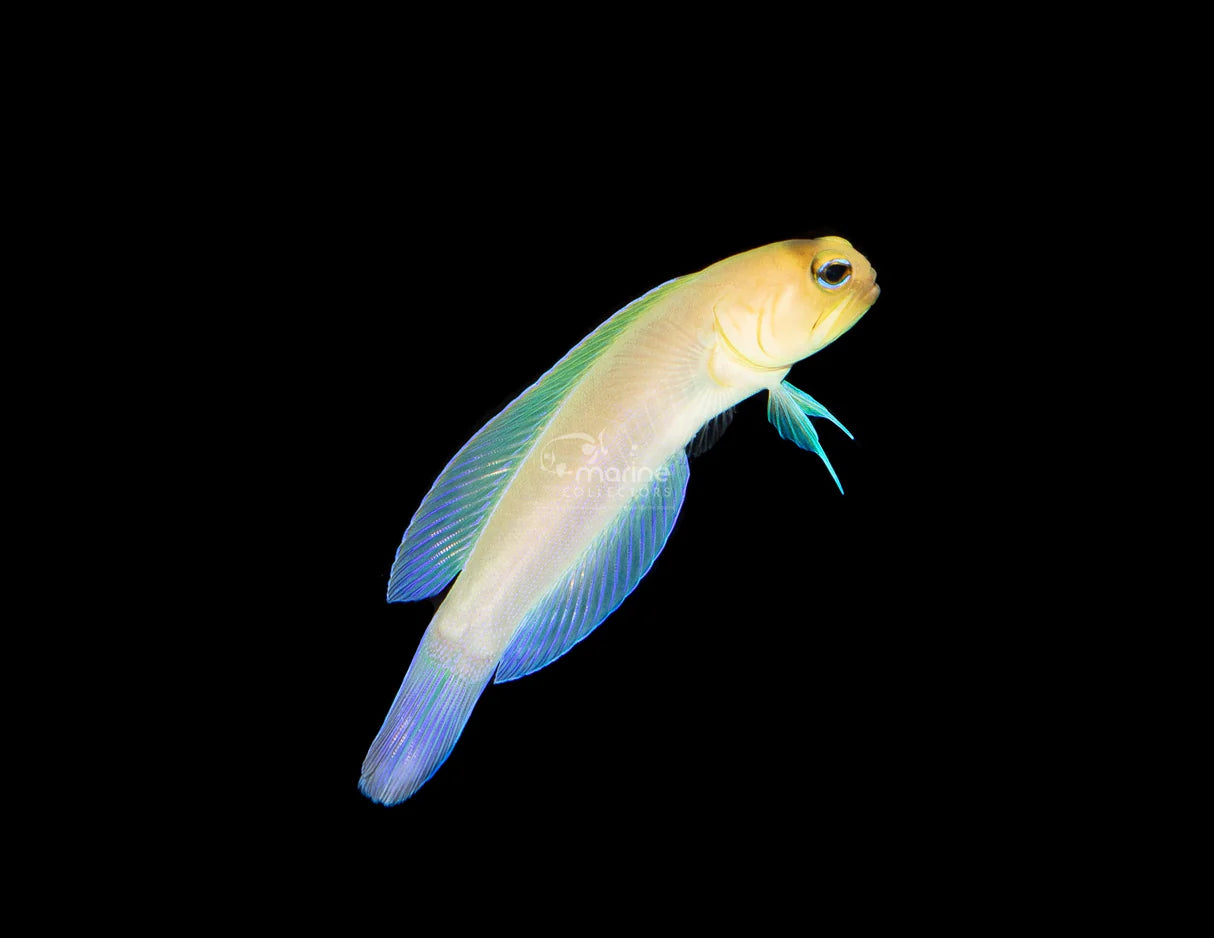
Pearly Jawfish (opistognathus aurifrons)
Pearly Jawfish (opistognathus aurifrons)
Couldn't load pickup availability
Pearly Jawfish (Opistognathus aurifrons)
The Pearly Jawfish is one of the most fascinating and personality-filled fish available for reef aquariums. Native to the warm Caribbean, this peaceful species is recognized by its pearly white body covered in iridescent blue spots, bright yellow head, and expressive blue eyes. Unlike most reef fish, the Pearly Jawfish spends its days buildinh and maintaining its burrow beneath the substrate, constantly rearranging shells, rubble, and sand. Hardy once established and full of character, the Pearly Jawfish is an excellent choice for reef keepers who can provide the deep substrate and peaceful environment it requires.
Suggested parameters
-
Temperature: 24–26°C (75–79°F)
-
Salinity: 1.025–1.026 SG
-
pH: 8.1–8.4
-
Alkalinity: 8–10 dKH
-
Calcium: 400–450 ppm
-
Magnesium: 1250–1400 ppm
-
Nitrate: 2–20 ppm
-
Phosphate: 0.03–0.10 ppm
Care and temperament
-
Difficulty: Moderate
-
Temperament: Peaceful
-
Reef safe: Yes; completely reef safe with corals and ornamental invertebrates
-
Minimum tank size: 30 gallons (115 litres)
-
Requires a fine sandy substrate at least 7–10 cm (3–4 inches) deep to construct a permanent burrow
-
Provide plenty of small pieces of rubble, crushed coral, and shells to reinforce and stabilize its burrow
-
Best kept in a mature aquarium with stable water parameters
-
Can be shy initially but becomes increasingly confident once established
-
A tightly fitting lid is absolutely essential, as Pearly Jawfish are exceptional jumpers, especially when startled
Diet
The Pearly Jawfish is a carnivore that readily accepts a variety of meaty foods once settled into the aquarium.
-
Frozen mysis shrimp
-
Enriched frozen brine shrimp
-
Chopped krill
-
Finely chopped shrimp, clam, and other marine meaty foods
-
Copepods and other small crustaceans
-
High-quality small marine pellets once acclimated
-
Feed 2–3 small meals daily for optimal health and body condition
Compatibility and tankmates
-
Excellent with clownfish, gobies, blennies, cardinalfish, firefish, fairy wrasses, flasher wrasses, anthias, and peaceful tangs
-
Safe with corals, shrimp, snails, crabs, and other reef invertebrates
-
Best housed with peaceful fish that will not intimidate it around its burrow
-
Avoid aggressive dottybacks, large wrasses, triggerfish, puffers, lionfish, hawkfish, or other territorial predators
-
Multiple Pearly Jawfish can sometimes be kept together in larger aquariums if ample space and multiple burrow sites are available, but aggression may occur in smaller systems
Health and acclimation notes
The Pearly Jawfish adapts well when introduced into a mature aquarium with an appropriate sand bed. Slow drip acclimation over 45–60 minutes is recommended before release. It is completely normal for a newly introduced fish to disappear into its burrow for several days while becoming comfortable in its new surroundings. Avoid disturbing the sand around the burrow during this period. A secure lid should already be in place before introduction, as newly acclimating jawfish are especially prone to jumping. Offering small frozen foods near the burrow entrance encourages feeding and helps the fish settle more quickly.
What you are buying
You will receive: 1 Pearly Jawfish (Opistognathus aurifrons)
Colouration consists of a pearly white body decorated with iridescent blue spots, a vibrant yellow head, and striking blue facial markings. Natural variations in colour intensity and pattern should be expected between individuals. Size and colouration may vary depending on age and collection location.
A mature aquarium with a deep fine sand bed, plenty of rubble for burrow construction, and a tightly fitting lid is essential before introduction. Slow drip acclimation is strongly recommended. Once established, the Pearly Jawfish becomes an incredibly rewarding, peaceful, and entertaining addition to almost any reef aquarium.
Why we love it
-
One of the most entertaining fish in the hobby, constantly excavating and maintaining its burrow
-
Peaceful and completely reef safe, making it an excellent addition to community reef aquariums
-
Displays unique hovering behaviour, often watching the aquarium from the entrance of its burrow
-
Full of personality and quickly learns the daily feeding routine
-
A truly interactive fish that becomes the centrepiece of the lower portion of the aquarium
Collapsible content
LIGHT
LOW: Place coral at the bottom of the tank. Depending on the type, coral may need to be placed off sand and therefore mounted on a ceramic disc of piece of rock.
MEDIUM: Place coral at mid-range of the tank. Best placed/glued on top of a rock scape at mid-range height.
HIGH: Place coral from mid range to just below water level. SPS coral are shallow growing so they require and are able to tolerate intense light.
FLOW
LOW: Most soft coral do well with a small, gentle pulse. There are certain corals that can even be placed in areas of indirect flow, meaning places aside a rock structure or set into a entrance to a cave style space.
MEDIUM: Many LPS types of coral prefer medium pulse current. Most Euphyllia or corals that have more tissue structure connected to their skeleton, don’t like to be in a high flow area like the direct flow of the wave pump.
HIGH: Similar to high light, SPS enjoy being in some heavy current. Most LPS and SPS that branch encrust or plate prefer high flow that simulates the top water waves.
SKILL
ENTRY: While some may say beginner level, "Entry" is a good term to be used when starting out in the world of corals and marine life. Prior to adding livestock, you want to ensure that your reef has the proper parameters including zero levels of ammonia and nitrite. Seeing traces of nitrate in your waters is a good sign - just keep them at a lower level of 2ppm to 10ppm. Maintaining correct temperature and salinity are a huge factor to stable parameters. Starting to monitor your PH, alkalinity, calcium and magnesium is a great habit to get into to keep a successful reef.
While some soft coral don’t require too much light, having a proper reef light that puts out the proper pars is very important. You'll also want to have a good amount of flow and protected rock areas, as placing corals in their happy spot is ideal for success.
ADVANCED: