

Little Shop of Coral
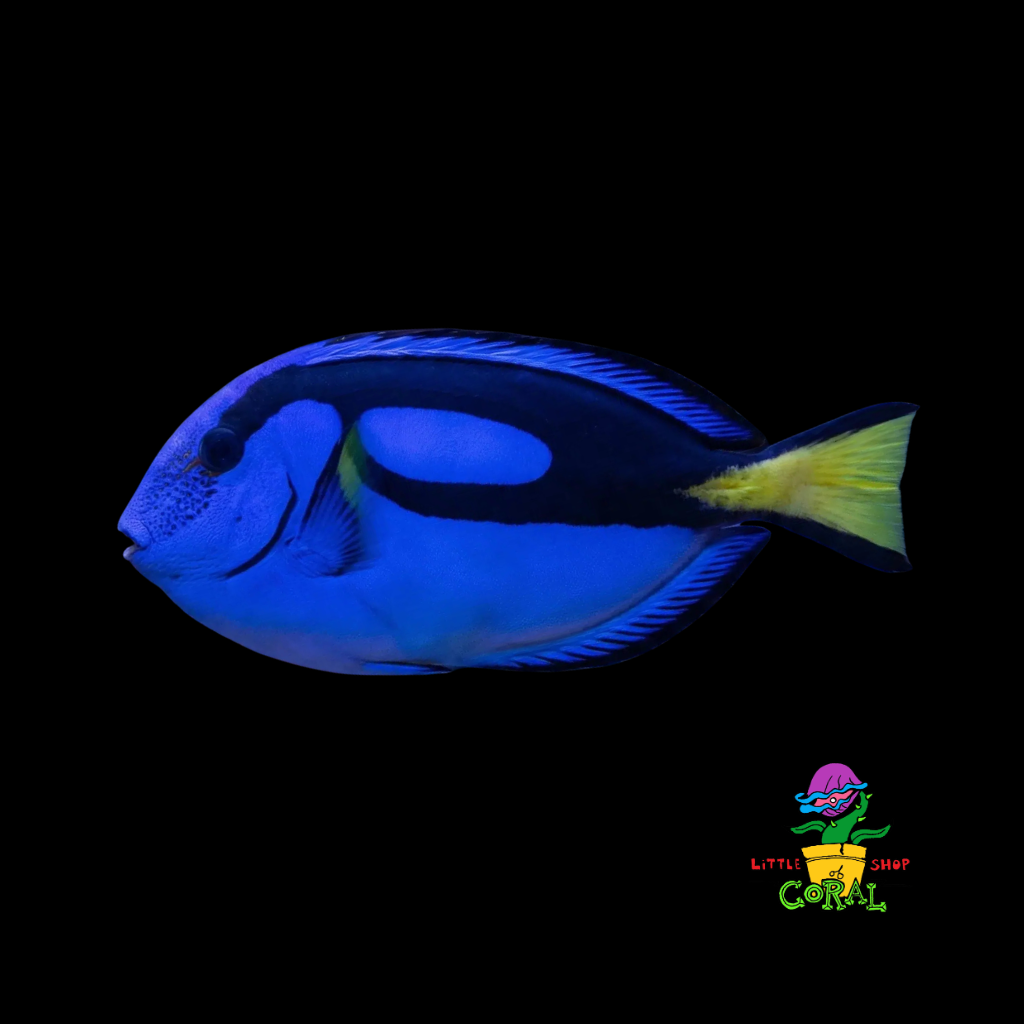
Blue Hippo Tang (Paracanthurus hepatus)
Blue Hippo Tang (Paracanthurus hepatus)
Couldn't load pickup availability
Few fish in the marine hobby carry the immediate recognition of the Blue Hippo Tang. That electric blue body, bold black palette marking sweeping from eye to tail, and vivid yellow caudal fin have made Paracanthurus hepatus one of the most sought-after reef fish in the world, a status that predates any animated film and has only grown since. But beyond the looks, this is a genuinely rewarding fish for the keeper who gives it what it actually needs: real swimming room, excellent water quality, a robust herbivore diet, and the patience to quarantine properly before introduction. Get those conditions right and the Blue Hippo Tang becomes one of the most active, personable, and visually stunning inhabitants a large reef can hold. Underestimate the space or skip the prep work, and it quickly becomes one of the hobby's most common cautionary tales. This is a fish worth doing right.
Why we love it
- One of the most iconic and instantly recognisable fish in the entire saltwater hobby, with colouring that holds up under any lighting condition
- Among the more peaceful tang species, generally tolerating other tang genera and peaceful community fish far better than most surgeonfish
- A genuinely useful grazer that works algae-covered rock surfaces and glass throughout the day, contributing to a cleaner, more balanced reef
- Unusually social for a tang: in large enough systems, multiple individuals can often be kept together if introduced simultaneously as juveniles
- A captive-bred aquaculture supply is increasingly available, offering hardier, better-adapted specimens that are a meaningful upgrade over wild-caught fish when you can source them
Suggested parameters
- Temperature: 23–26°C (72–78°F)
- Salinity: 1.020–1.025 SG
- pH: 8.1–8.4
- Alkalinity: 8–12 dKH
- Ammonia/Nitrite: 0
- Nitrate: Under 10 ppm; this species is sensitive to degraded water quality and high nutrients over time
- Strong surface agitation and high dissolved oxygen are important given this species' open-water origins
Care and temperament
- Difficulty: Moderate
- Temperament: Peaceful with most reef fish; semi-aggressive with other Paracanthurus and can be targeted by more assertive tang species already established in the tank
- Reef safe: Yes. Completely safe with corals and invertebrates
- Minimum tank size: 125 gallons; 150 gallons or larger is strongly preferred for long-term keeping, and tank length matters as much as volume: a six-foot footprint minimum gives this active swimmer the straight-line distance it needs
Diet
The Blue Hippo Tang is primarily an herbivore with a high-activity lifestyle that needs to be matched with consistent, generous feeding.
- Nori and dried seaweed sheets on a clip, offered daily; access to greens between feedings is important for immune health and temperament
- Spirulina-based pellets and flakes
- Frozen herbivore and reef blends
- Will graze continuously on algae-covered live rock; a mature system with established coralline and turf algae growth is genuinely beneficial
- Feed small amounts 2 to 3 times per day; a diet that is predominantly algae-based will support colour, reduce aggression, and strengthen the immune system over the long term
Compatibility and tankmates
- An excellent community reef fish, compatible with clownfish, wrasses, gobies, blennies, basslets, cardinalfish, anthias, and most peaceful to semi-aggressive reef species
- Generally peaceful with tang species from other genera such as Zebrasoma, Acanthurus, and Ctenochaetus, though introductions should be planned and the system must be large enough to support multiple tangs without crowding
- For the best results with other tangs already in the system, introduce the Blue Hippo first and allow it to establish before adding more assertive species
- Multiple Blue Hippo Tangs can be kept together in very large systems if introduced simultaneously as juveniles
- When threatened, this species will wedge itself tightly into rockwork crevices; ensure your aquascape has suitable shelter points
Health and acclimation notes
The Blue Hippo Tang is notoriously susceptible to marine ich (Cryptocaryon irritans) and marine velvet (Amyloodinium), and this is the single most important thing to understand before purchasing one. Unlike many other reef fish, tangs produce comparatively little protective body slime, leaving them far more vulnerable to parasitic attack, particularly during the stress of shipping and introduction. Quarantine before adding to any display tank is not optional for this species; a proper 4 to 6-week quarantine period is the standard most experienced hobbyists follow. Avoid any copper-based treatments in a reef system as copper will harm gut microfauna essential to tang digestion. Once established and feeding well in a stable, mature system, the Blue Hippo Tang is a durable, long-lived animal capable of living well beyond a decade with proper care. When startled, newly introduced fish will often wedge themselves into rockwork and remain hidden for the first day or two; this is normal and not a cause for concern.
What you are buying
- You will receive: 1 Blue Hippo Tang (Paracanthurus hepatus)
- Colouring intensity and the depth of the blue can vary between individuals and by region of origin; fish from the west-central Indian Ocean may show some yellow on the ventral surface
- Size and exact patterning may vary; please see size options at checkout
- As with all tangs, slow acclimation and quarantine are strongly recommended before introduction to an established display
Collapsible content
LIGHT
LOW: Place coral at the bottom of the tank. Depending on the type, coral may need to be placed off sand and therefore mounted on a ceramic disc of piece of rock.
MEDIUM: Place coral at mid-range of the tank. Best placed/glued on top of a rock scape at mid-range height.
HIGH: Place coral from mid range to just below water level. SPS coral are shallow growing so they require and are able to tolerate intense light.
FLOW
LOW: Most soft coral do well with a small, gentle pulse. There are certain corals that can even be placed in areas of indirect flow, meaning places aside a rock structure or set into a entrance to a cave style space.
MEDIUM: Many LPS types of coral prefer medium pulse current. Most Euphyllia or corals that have more tissue structure connected to their skeleton, don’t like to be in a high flow area like the direct flow of the wave pump.
HIGH: Similar to high light, SPS enjoy being in some heavy current. Most LPS and SPS that branch encrust or plate prefer high flow that simulates the top water waves.
SKILL
ENTRY: While some may say beginner level, "Entry" is a good term to be used when starting out in the world of corals and marine life. Prior to adding livestock, you want to ensure that your reef has the proper parameters including zero levels of ammonia and nitrite. Seeing traces of nitrate in your waters is a good sign - just keep them at a lower level of 2ppm to 10ppm. Maintaining correct temperature and salinity are a huge factor to stable parameters. Starting to monitor your PH, alkalinity, calcium and magnesium is a great habit to get into to keep a successful reef.
While some soft coral don’t require too much light, having a proper reef light that puts out the proper pars is very important. You'll also want to have a good amount of flow and protected rock areas, as placing corals in their happy spot is ideal for success.
ADVANCED: