

Little Shop of Coral
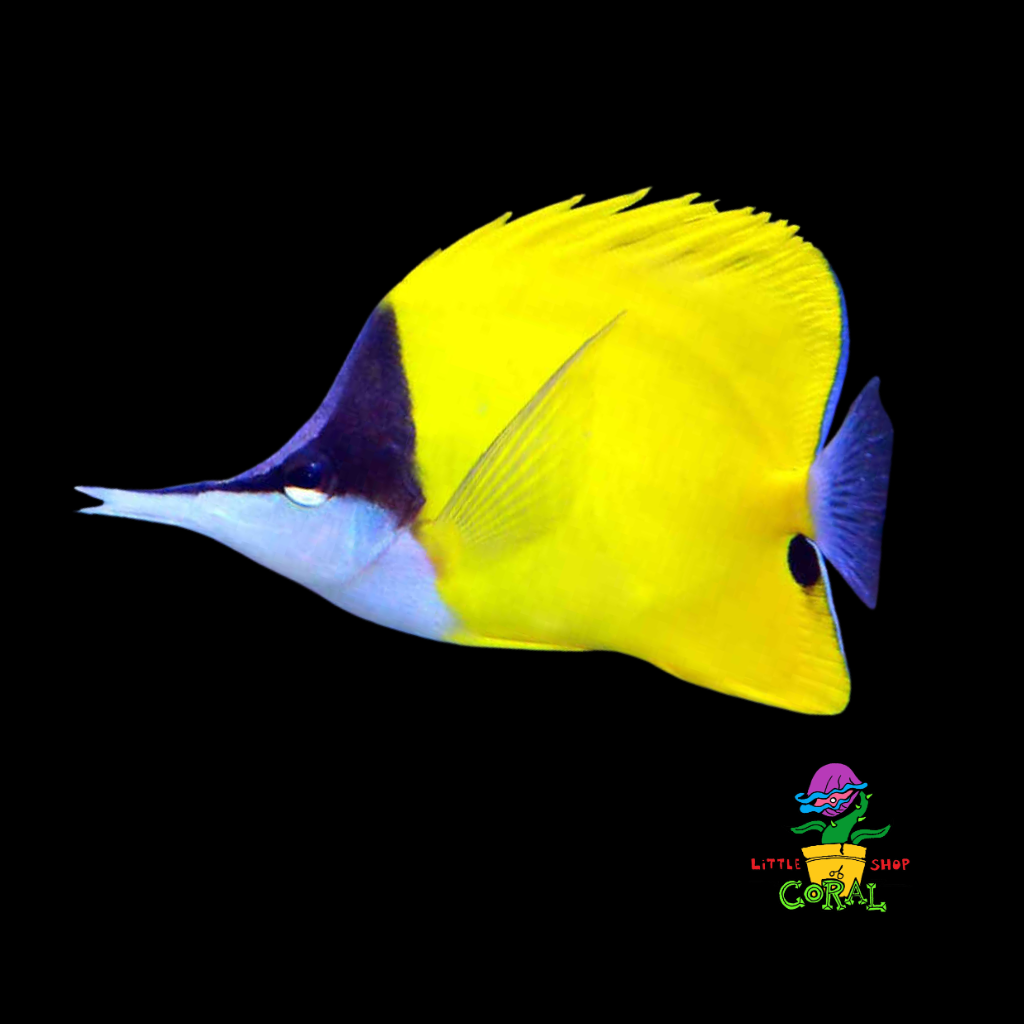
Longnose Butterflyfish (Forcipiger longirostris)
Longnose Butterflyfish (Forcipiger longirostris)
Couldn't load pickup availability
The Longnose Butterflyfish is one of the most elegant and characterful butterflies available in the hobby. With its vivid yellow body, striking black-and-white head markings, and an impossibly long, needle-like snout, this fish looks purpose-built for probing into reef crevices after small prey. F. longirostris is distinguished from its close relative F. flavissimus by a cluster of small black dots on the chest and black coloration that covers the entire eye, rather than just the upper portion. It is one of the better butterflyfish choices for dedicated fish-only and FOWLR systems, and a rewarding fish for keepers who invest time in getting it settled and feeding well.
Why we love it
- Extraordinary elongated snout, one of the most distinctive silhouettes in the hobby
- Bold yellow colouration with sharp contrast against blue reef lighting
- Peaceful and graceful, with active foraging behaviour
- One of the more aquarium-adaptable butterflies once established
Suggested parameters
- Temperature: 24 to 26°C (75 to 79°F)
- Salinity: 1.024 to 1.026 SG
- pH: 8.1 to 8.4
- Alkalinity: 8 to 10 dKH
- Ammonia/Nitrite: 0
- Nitrate: Under 20 ppm (stable, mature water chemistry preferred)
Care and temperament
- Difficulty: Moderate (sensitive to unstable water quality and acclimation stress)
- Temperament: Peaceful toward most tankmates, can be territorial toward other butterflyfish
- Reef safe: With caution (generally leaves stony corals alone, but will target tubeworms, small ornamental shrimp, and other small invertebrates)
- Minimum tank size: 100 gallons, with ample live rock
Diet
F. longirostris uses its long snout to probe coral branches and reef crevices for small crustacean prey, which it takes whole. In the aquarium, getting this fish onto frozen foods is the key to long-term success.
- Frozen mysis shrimp (primary staple once accepted)
- Frozen brine shrimp and enriched artemia
- Finely chopped meaty marine foods
- High-quality carnivore pellets as a supplement once trained
- Pressing soft foods into crevices or openings on a piece of dead coral skeleton can encourage finicky new arrivals to begin feeding
- Small clams or black mussels on the half-shell placed in the tank can also help entice reluctant feeders, with frozen mysis becoming more readily accepted over time
- Target feeding is often necessary given the narrow snout; feed 2 to 3 times per day
Compatibility and tankmates
- Peaceful with most reef fish of similar or larger size
- Can be shy when first introduced; more assertive tankmates should be added after this species has settled in
- Best kept without others of the same genus unless a confirmed male-female pair, as they can become territorial and fight for territory
- Avoid very small shrimp and ornamental worms, these will be eaten
- Good companions include peaceful tangs, larger wrasses, and similarly sized passive fish
Health and acclimation notes
Longnose Butterflyfish can be sensitive to ich and other common marine parasites, particularly during the stress of shipping and acclimation. Quarantine is strongly recommended before introduction to a display system. A well-established tank with plenty of live rock for natural foraging opportunities gives this fish the best start. A well established system with ample live rock offering natural feeding opportunities is highly recommended for this species.
What you are buying
- You will receive: 1 Longnose Butterflyfish (Forcipiger longirostris)
- Colour and size can vary between individuals
Slow acclimation is strongly recommended, and quarantine before display is encouraged, especially in systems with sensitive or high-value livestock.
Collapsible content
LIGHT
LOW: Place coral at the bottom of the tank. Depending on the type, coral may need to be placed off sand and therefore mounted on a ceramic disc of piece of rock.
MEDIUM: Place coral at mid-range of the tank. Best placed/glued on top of a rock scape at mid-range height.
HIGH: Place coral from mid range to just below water level. SPS coral are shallow growing so they require and are able to tolerate intense light.
FLOW
LOW: Most soft coral do well with a small, gentle pulse. There are certain corals that can even be placed in areas of indirect flow, meaning places aside a rock structure or set into a entrance to a cave style space.
MEDIUM: Many LPS types of coral prefer medium pulse current. Most Euphyllia or corals that have more tissue structure connected to their skeleton, don’t like to be in a high flow area like the direct flow of the wave pump.
HIGH: Similar to high light, SPS enjoy being in some heavy current. Most LPS and SPS that branch encrust or plate prefer high flow that simulates the top water waves.
SKILL
ENTRY: While some may say beginner level, "Entry" is a good term to be used when starting out in the world of corals and marine life. Prior to adding livestock, you want to ensure that your reef has the proper parameters including zero levels of ammonia and nitrite. Seeing traces of nitrate in your waters is a good sign - just keep them at a lower level of 2ppm to 10ppm. Maintaining correct temperature and salinity are a huge factor to stable parameters. Starting to monitor your PH, alkalinity, calcium and magnesium is a great habit to get into to keep a successful reef.
While some soft coral don’t require too much light, having a proper reef light that puts out the proper pars is very important. You'll also want to have a good amount of flow and protected rock areas, as placing corals in their happy spot is ideal for success.
ADVANCED: