

Little Shop of Coral
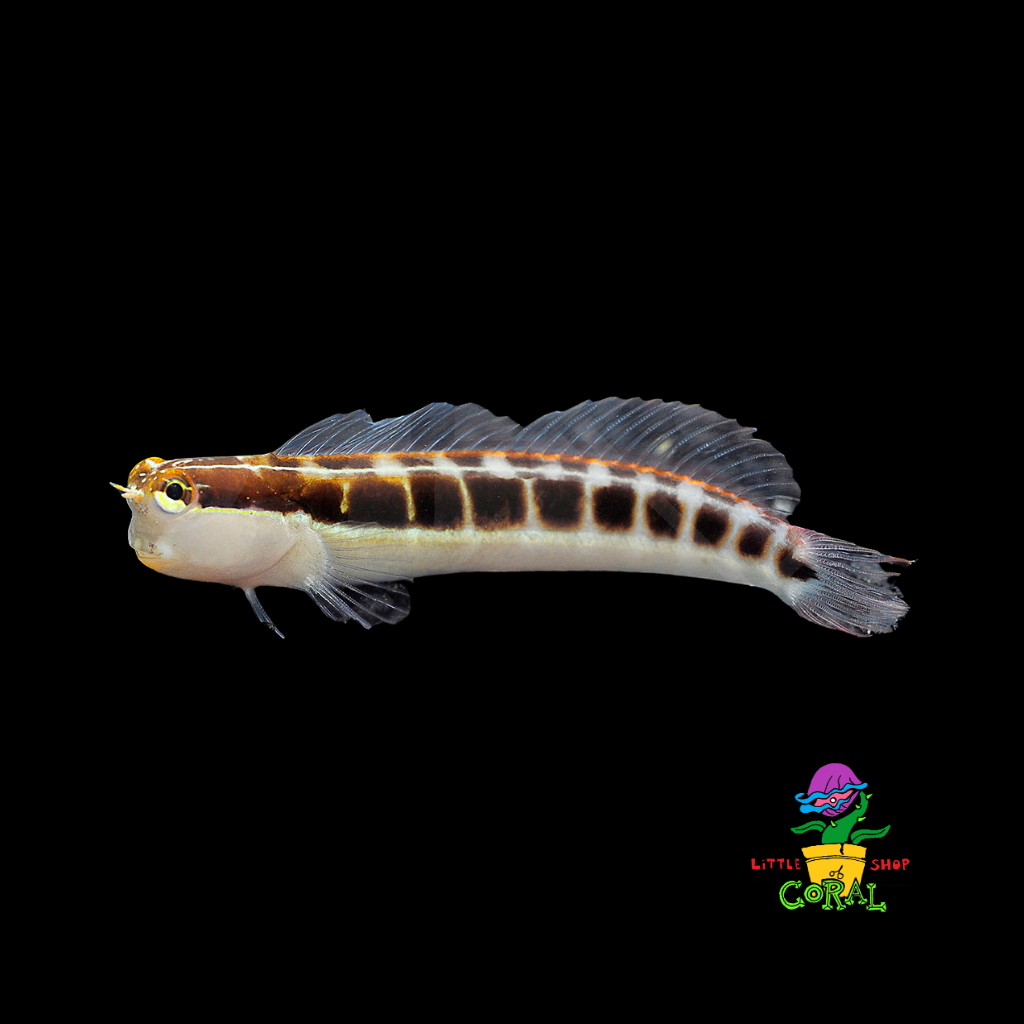
Lined Blenny (Ecsenius lineatus)
Lined Blenny (Ecsenius lineatus)
Couldn't load pickup availability
The Lined Blenny is a compact, understated little fish that earns a place in the reef through sheer personality and utility rather than flashy colour. The lower half of the body is white and the upper half is brown to black in coloration, and their very large eyes and small mouth give these fish a genuinely comical look that wins over anyone who takes a moment to watch one perching in the rockwork. Colour and patterning can vary by region and maturity, with some individuals showing a more broken pattern of vertical bars or blotches alongside or instead of the classic lateral line. Like all Ecsenius blennies, this species is an active grazer, a dedicated rockwork percher, and a fish with a bigger personality than its size suggests.
Why we love it
- Distinctively patterned with bold two-tone colouring and oversized, expressive eyes
- Hardy, easy to keep, and adaptable to a wide range of peaceful reef systems
- Constant daytime grazer that actively helps manage nuisance algae on rockwork
- Peaceful species that will generally mind its own business while enjoying watching current events from a favourite perch among coral or live rock
- Compact size makes it suitable for smaller systems where larger blennies would not fit
Suggested parameters
- Temperature: 24 to 26°C (75 to 79°F)
- Salinity: 1.025 to 1.026 SG
- pH: 8.1 to 8.4
- Alkalinity: 8 to 10 dKH
- Calcium: 400 to 450 ppm
- Magnesium: 1250 to 1400 ppm
- Nitrate: 5 to 20 ppm
- Phosphate: 0.03 to 0.12 ppm
Care and temperament
- Difficulty: Easy
- Temperament: Peaceful; may defend a small territory around its preferred perch or crevice
- Reef safe: Yes, with the note that this blenny may nip at the polyps and base of Acropora and Montipora and is not well suited for SPS-dominant tanks with immature or small colonies
- Minimum tank size: 30 gallons with plenty of live rock for perching, grazing, and hiding
- Can be maintained in reef or fish-only aquariums with rocky areas containing caves and holes, and ideally heavy algae growth on the rockwork to graze on
- A tight-fitting lid is essential; this species is a capable jumper
Diet
The Lined Blenny is a dedicated herbivore and needs consistent access to algae to stay healthy.
- Grazes naturally on algae growing on live rock and tank surfaces throughout the day
- Nori and dried seaweed sheets on a clip
- Spirulina-based pellets and flakes
- Frozen herbivore blends containing marine and blue-green algae
- If sufficient aquarium algae is not present, the diet must be supplemented with vegetable matter and spirulina-based foods; without enough greens this fish will slowly waste away
- Spirulina-based foods treated with Selcon offer additional nutritional benefits
- Feed twice daily, offering only what the fish will consume within a few minutes
Compatibility and tankmates
- Excellent with clownfish, small wrasses, peaceful gobies, shrimp gobies, dartfish, and most reef community fish
- Tankmates must be peaceful, as even moderately aggressive species will prevent this fish from getting its share of food
- Keep one per system unless a confirmed mated pair
- Will coexist with many heterospecific tankmates as long as they do not have a similar body shape or are not overly aggressive
- Generally safe with most invertebrates, though caution is warranted with very small ornamental crustaceans
Health and acclimation notes
The Lined Blenny is a hardy and forgiving species that settles quickly into a well-established system with mature live rock and a functioning algae crop. A drip acclimation of at least 30 minutes is recommended. Care requirements centre on a stable, peaceful environment with ample rocky structure for perching and hiding and a diet consistently high in vegetable matter. A well-fed Lined Blenny in a system with enough territory is one of the most reliable and trouble-free fish in the hobby.
What you are buying
- You will receive: 1 Lined Blenny (Ecsenius lineatus)
- Colour and patterning can vary between individuals and regions; some specimens display more distinct lateral striping while others show a more mottled or barred pattern
Slow acclimation is recommended. A tight-fitting lid is essential, as this species will jump.
Collapsible content
LIGHT
LOW: Place coral at the bottom of the tank. Depending on the type, coral may need to be placed off sand and therefore mounted on a ceramic disc of piece of rock.
MEDIUM: Place coral at mid-range of the tank. Best placed/glued on top of a rock scape at mid-range height.
HIGH: Place coral from mid range to just below water level. SPS coral are shallow growing so they require and are able to tolerate intense light.
FLOW
LOW: Most soft coral do well with a small, gentle pulse. There are certain corals that can even be placed in areas of indirect flow, meaning places aside a rock structure or set into a entrance to a cave style space.
MEDIUM: Many LPS types of coral prefer medium pulse current. Most Euphyllia or corals that have more tissue structure connected to their skeleton, don’t like to be in a high flow area like the direct flow of the wave pump.
HIGH: Similar to high light, SPS enjoy being in some heavy current. Most LPS and SPS that branch encrust or plate prefer high flow that simulates the top water waves.
SKILL
ENTRY: While some may say beginner level, "Entry" is a good term to be used when starting out in the world of corals and marine life. Prior to adding livestock, you want to ensure that your reef has the proper parameters including zero levels of ammonia and nitrite. Seeing traces of nitrate in your waters is a good sign - just keep them at a lower level of 2ppm to 10ppm. Maintaining correct temperature and salinity are a huge factor to stable parameters. Starting to monitor your PH, alkalinity, calcium and magnesium is a great habit to get into to keep a successful reef.
While some soft coral don’t require too much light, having a proper reef light that puts out the proper pars is very important. You'll also want to have a good amount of flow and protected rock areas, as placing corals in their happy spot is ideal for success.
ADVANCED: