
Little Shop of Coral
Indigo Hamlet (Hypoplectrus indigo)
Indigo Hamlet (Hypoplectrus indigo)
Couldn't load pickup availability
Indigo Hamlet (Hypoplectrus indigo)
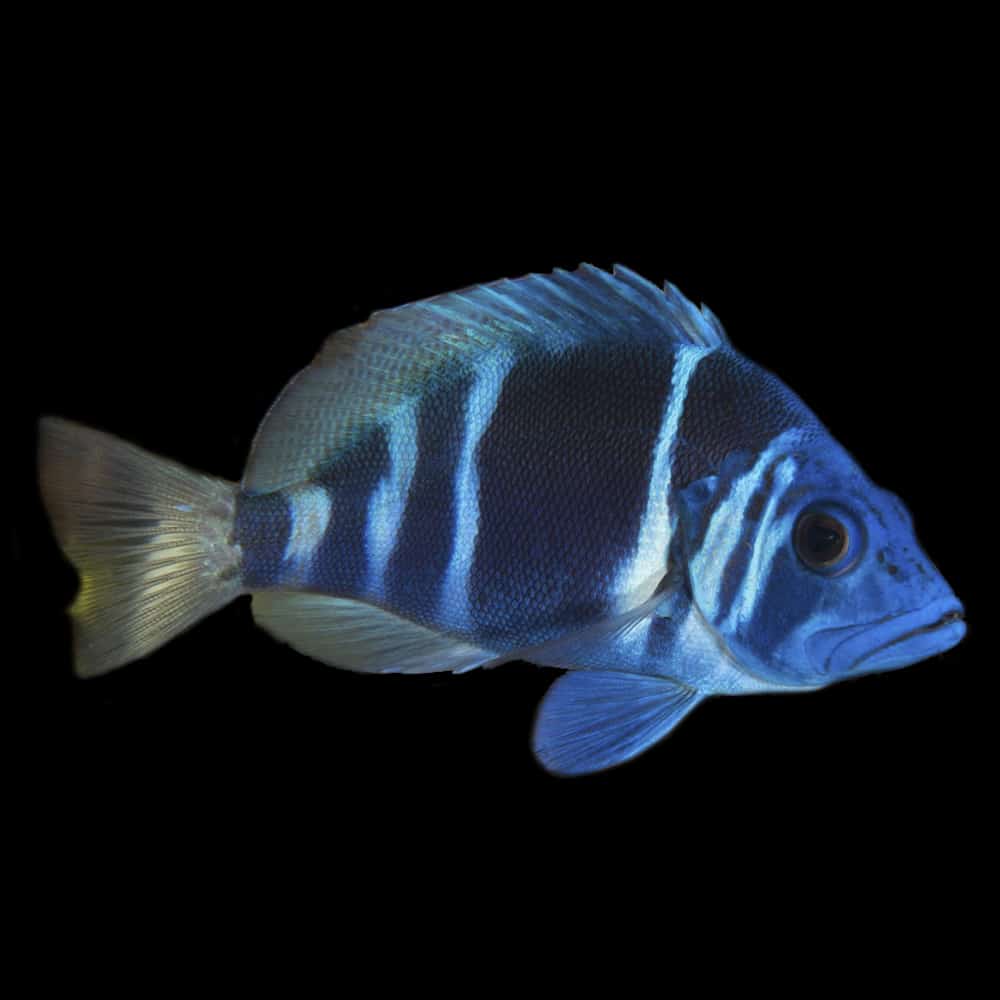
The Indigo Hamlet is a rare Caribbean reef fish. Known for its rich sapphire to deep indigo-blue colouration and bold, inquisitive nature. Unlike many cave-dwelling reef fish that remain hidden, the Indigo Hamlet confidently patrols its territory, weaving through rockwork while carefully observing everything around it. Its monochromatic colour makes it stand out against vibrant corals, offering a unique contrast that few marine fish can match. Although peaceful with most reef inhabitants, this species has a naturally predatory instinct toward tiny crustaceans, making it best suited for reef aquariums with appropriately sized tankmates.
Suggested parameters
-
Temperature: 24–26°C (75–79°F)
-
Salinity: 1.025–1.026 SG
-
pH: 8.1–8.4
-
Alkalinity: 8–10 dKH
-
Calcium: 400–450 ppm
-
Magnesium: 1250–1400 ppm
-
Nitrate: 2–20 ppm
-
Phosphate: 0.03–0.10 ppm
Care and temperament
-
Difficulty: Easy to Moderate
-
Temperament: Semi-aggressive
-
Reef safe: Yes, with corals; use caution with very small ornamental shrimp and tiny crustaceans
-
Minimum tank size: 40 gallons (150 litres)
-
Appreciates an aquascape with plenty of caves, ledges, and swim-throughs
-
Establishes a territory but usually ignores unrelated fish that do not compete for the same space
-
Best maintained as a single specimen unless housed in a very large aquarium
-
Can become defensive toward other hamlets, basslets, or similarly shaped fish
-
A secure lid is recommended, particularly during acclimation
Diet
The Indigo Hamlet is an opportunistic carnivore and eagerly accepts a varied diet.
-
Frozen mysis shrimp
-
Enriched frozen brine shrimp
-
Chopped shrimp, clam, squid, and krill
-
High-quality marine pellets
-
Premium marine flakes
-
Feed once or twice daily, rotating foods to promote long-term health and vibrant colouration
Compatibility and tankmates
-
Excellent with tangs, clownfish, gobies, blennies, cardinalfish, anthias, fairy wrasses, and dwarf angelfish
-
Completely safe with all corals
-
Compatible with larger ornamental shrimp, snails, and crabs
-
May consume tiny shrimp species or very small crustaceans
-
Avoid large predatory fish such as groupers, lionfish, and triggerfish
-
Should not be housed with other hamlets or territorial basslets in smaller aquariums
Health and acclimation notes
The Indigo Hamlet is generally a resilient species that settles into captivity with minimal difficulty when introduced to a mature aquarium. A slow drip acclimation of 45–60 minutes is recommended. New arrivals often spend their first day or two becoming familiar with the aquascape before confidently claiming a section of rockwork as their own. Offering frozen mysis shortly after introduction usually encourages an early feeding response and helps reduce stress.
What you are buying
You will receive: 1 Indigo Hamlet (Hypoplectrus indigo)
This species displays deep indigo to sapphire-blue colouration, with natural variation in shade depending on age, mood, lighting, and collection locality. Size and colour intensity will vary from fish to fish.
A mature aquarium with stable water quality and ample live rock is recommended. Slow drip acclimation is encouraged before introduction. The Indigo Hamlet is an uncommon and rewarding Caribbean species that offers colour and confident behaviour without posing a risk to corals.
Why we love it
-
Rich sapphire-blue colouration unlike almost any other Caribbean reef fish
-
Rarely available and highly sought after by collectors
-
Confident, inquisitive behaviour makes it enjoyable to observe
-
Easy to care for in a mature marine aquarium
-
Safe with corals and most community reef fish
-
A unique display fish that adds bold colour and character to any reef aquarium
Collapsible content
LIGHT
LOW: Place coral at the bottom of the tank. Depending on the type, coral may need to be placed off sand and therefore mounted on a ceramic disc of piece of rock.
MEDIUM: Place coral at mid-range of the tank. Best placed/glued on top of a rock scape at mid-range height.
HIGH: Place coral from mid range to just below water level. SPS coral are shallow growing so they require and are able to tolerate intense light.
FLOW
LOW: Most soft coral do well with a small, gentle pulse. There are certain corals that can even be placed in areas of indirect flow, meaning places aside a rock structure or set into a entrance to a cave style space.
MEDIUM: Many LPS types of coral prefer medium pulse current. Most Euphyllia or corals that have more tissue structure connected to their skeleton, don’t like to be in a high flow area like the direct flow of the wave pump.
HIGH: Similar to high light, SPS enjoy being in some heavy current. Most LPS and SPS that branch encrust or plate prefer high flow that simulates the top water waves.
SKILL
ENTRY: While some may say beginner level, "Entry" is a good term to be used when starting out in the world of corals and marine life. Prior to adding livestock, you want to ensure that your reef has the proper parameters including zero levels of ammonia and nitrite. Seeing traces of nitrate in your waters is a good sign - just keep them at a lower level of 2ppm to 10ppm. Maintaining correct temperature and salinity are a huge factor to stable parameters. Starting to monitor your PH, alkalinity, calcium and magnesium is a great habit to get into to keep a successful reef.
While some soft coral don’t require too much light, having a proper reef light that puts out the proper pars is very important. You'll also want to have a good amount of flow and protected rock areas, as placing corals in their happy spot is ideal for success.
ADVANCED: