
Little Shop of Coral
Golden Headed Sleeper Goby (Valenciennea strigata)
Golden Headed Sleeper Goby (Valenciennea strigata)
Couldn't load pickup availability
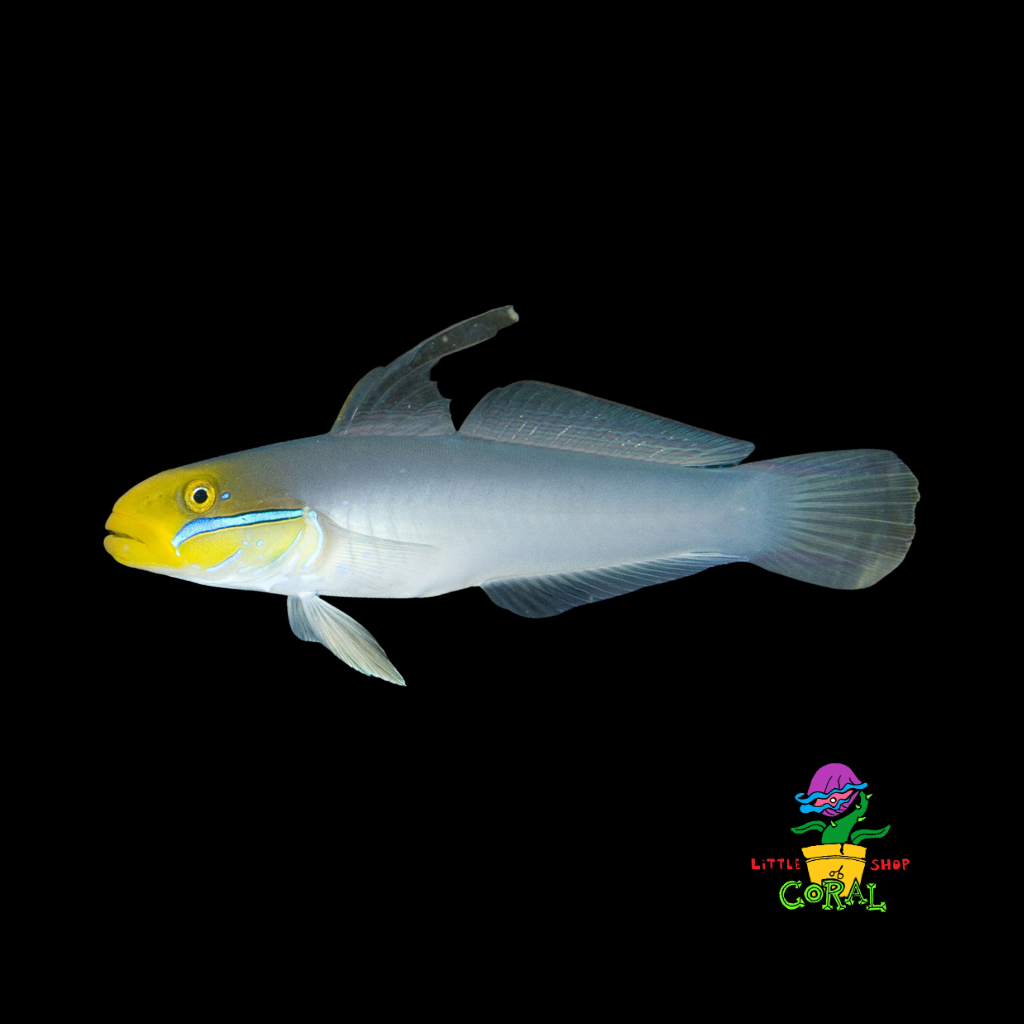
The Golden Headed Sleeper Goby is one of the best natural sand-stirrers in the hobby. Peaceful and reef safe, it spends the day taking mouthfuls of sand, sifting out tiny food particles, and releasing clean sand back onto the bed helping keep your substrate looking bright and healthy. With its crisp white body and gold face markings, it’s both a functional and beautiful addition to established reef tanks.
Why we love it
-
Constant sand-sifting helps keep the substrate clean and aerated
-
Peaceful, reef-safe, and great for community tanks
-
Eye-catching gold head pattern with a clean, minimal look
-
Fun behaviour — always working and re-scaping the sandbed
Care & Compatibility
Care Level: Moderate
Temperament: Peaceful
Reef Safe: Yes
Diet: Carnivore/Omnivore (microfauna + prepared foods)
Adult Size: ~6"
Minimum Tank Size: 30 gallons (40g+ recommended for long-term stability)
Feeding (Key to Success)
This species can slowly lose weight in tanks without enough natural food, especially newer setups. For best results:
-
Offer frozen mysis, brine shrimp, finely chopped seafood
-
Small sinking pellets and quality frozen blends
-
Feed regularly and watch that it’s actually eating (not just sifting)
Best in mature tanks with an established sandbed and microfauna.
Tank & Setup Notes
-
Needs a fine sandbed (not coarse gravel) for safe sifting
-
Provide plenty of rockwork and a secure lid (they can jump)
-
May bury frags or blow sand onto low corals - place corals accordingly
Compatibility Tips
-
Very peaceful with most fish
-
Can be territorial with similar sand-sifting gobies in smaller tanks
-
Often kept singly, or as a bonded pair in larger systems
Acclimation & Health
Slow acclimation is recommended. Like many sand-sifting gobies, stable parameters and consistent feeding are crucial early on.
Collapsible content
LIGHT
LOW: Place coral at the bottom of the tank. Depending on the type, coral may need to be placed off sand and therefore mounted on a ceramic disc of piece of rock.
MEDIUM: Place coral at mid-range of the tank. Best placed/glued on top of a rock scape at mid-range height.
HIGH: Place coral from mid range to just below water level. SPS coral are shallow growing so they require and are able to tolerate intense light.
FLOW
LOW: Most soft coral do well with a small, gentle pulse. There are certain corals that can even be placed in areas of indirect flow, meaning places aside a rock structure or set into a entrance to a cave style space.
MEDIUM: Many LPS types of coral prefer medium pulse current. Most Euphyllia or corals that have more tissue structure connected to their skeleton, don’t like to be in a high flow area like the direct flow of the wave pump.
HIGH: Similar to high light, SPS enjoy being in some heavy current. Most LPS and SPS that branch encrust or plate prefer high flow that simulates the top water waves.
SKILL
ENTRY: While some may say beginner level, "Entry" is a good term to be used when starting out in the world of corals and marine life. Prior to adding livestock, you want to ensure that your reef has the proper parameters including zero levels of ammonia and nitrite. Seeing traces of nitrate in your waters is a good sign - just keep them at a lower level of 2ppm to 10ppm. Maintaining correct temperature and salinity are a huge factor to stable parameters. Starting to monitor your PH, alkalinity, calcium and magnesium is a great habit to get into to keep a successful reef.
While some soft coral don’t require too much light, having a proper reef light that puts out the proper pars is very important. You'll also want to have a good amount of flow and protected rock areas, as placing corals in their happy spot is ideal for success.
ADVANCED: