

Little Shop of Coral
Flame Scallops (Lima Scarbra)
Flame Scallops (Lima Scarbra)
Couldn't load pickup availability
Flame Scallop (Lima scabra)
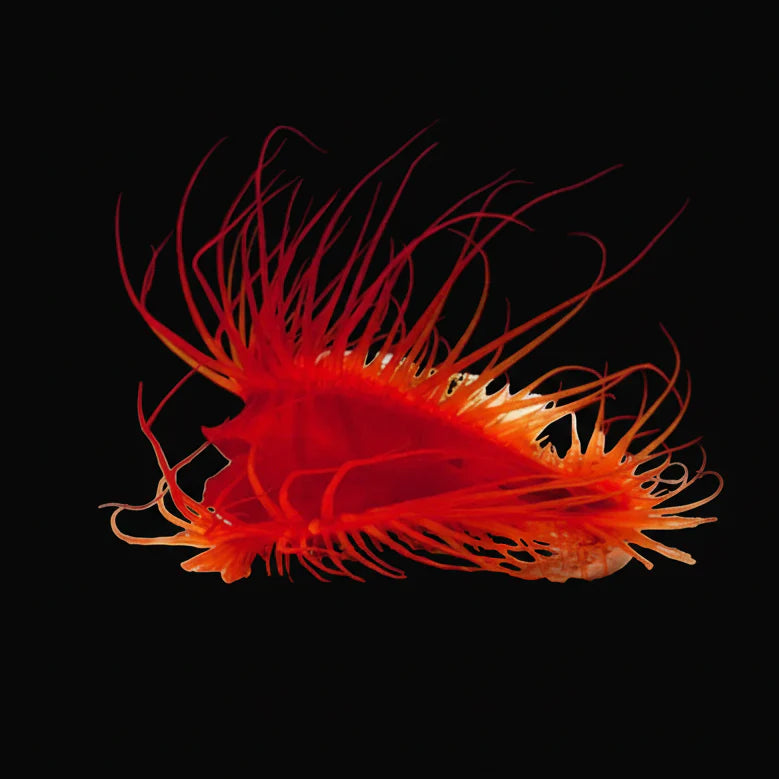
The Flame Scallop is one of the most eye-catching and unique invertebrates available for marine aquariums. Native to the Caribbean and Western Atlantic. It is recognizable by its bright red mantle and the dozens of vibrant crimson tentacles that extend from its shell. It also has bright electric-blue eyes line the edge of the mantle, which allows the scallop to help detect movement and light. Unlike most clams, the Flame Scallop is capable of swimming by rapidly clapping its shell together to escape predators. This species is best suited for experienced aquarists with mature reef systems whigh can provide the constant supply of planktonic foods it requires.
Suggested parameters
-
Temperature: 24–26°C (75–79°F)
-
Salinity: 1.025–1.026 SG
-
pH: 8.1–8.4
-
Alkalinity: 8–10 dKH
-
Calcium: 400–450 ppm
-
Magnesium: 1250–1400 ppm
-
Nitrate: 2–10 ppm
-
Phosphate: 0.02–0.08 ppm
Care and temperament
-
Difficulty: Expert
-
Temperament: Peaceful
-
Reef safe: Yes; completely reef safe with corals and fish
-
Minimum tank size: 30 gallons (115 litres)
-
Requires a mature, well-established aquarium with abundant natural plankton and stable water quality
-
Prefers shaded areas, caves, or overhangs where it can anchor itself using byssal threads
-
Does not rely on photosynthesis and must be fed regularly to survive long term
-
Sensitive to rapid changes in salinity, temperature, and water chemistry
-
Best kept in aquariums free from predators that may nip at its mantle or shell
Diet
The Flame Scallop is a filter feeder that requires frequent feeding with suspended planktonic foods. Long-term success depends on providing an adequate food supply.
-
Live phytoplankton
-
Live or preserved zooplankton
-
Rotifers
-
Reef plankton blends
-
Fine particulate coral foods designed for filter feeders
-
Frequent feedings are essential, ideally daily or multiple times per day in systems without abundant natural plankton
Compatibility and tankmates
-
Excellent with peaceful reef fish including clownfish, gobies, blennies, cardinalfish, dartfish, anthias, and peaceful wrasses
-
Completely safe with corals and other sessile invertebrates
-
Compatible with shrimp, snails, and most reef-safe crabs
-
Avoid angelfish, butterflyfish, triggerfish, puffers, large wrasses, and other species known to nip at clams and other molluscs
-
Avoid housing with predatory crabs or large hermit crabs that may disturb or injure the scallop
Health and acclimation notes
Flame Scallops should be drip acclimated slowly over 45–60 minutes to minimize stress. Place the scallop in a shaded location with moderate water flow where suspended food can easily reach it. It may relocate itself if it finds a more suitable position. Healthy specimens display a fully extended mantle with active red tentacles and react quickly by closing their shell when disturbed. Because starvation is the primary cause of mortality in captivity, only introduce this species into a mature aquarium capable of meeting its specialized feeding requirements.
What you are buying
You will receive: 1 Flame Scallop (Lima scabra)
Each specimen displays a vivid red mantle with brilliant scarlet feeding tentacles and rows of tiny electric-blue eyes along the mantle edge. Colour intensity, shell size, and tentacle length may vary naturally between individuals.
A mature reef aquarium with stable water parameters and an established plankton population is strongly recommended before introduction. Slow drip acclimation is essential. Due to its specialized feeding requirements, the Flame Scallop is best suited to experienced reef aquarists prepared to provide regular planktonic feedings.
Why we love it
-
Fascinating rows of electric-blue eyes that detect movement and light
-
Unique ability to "swim" by rapidly clapping its shell when threatened
-
Completely reef safe and peaceful with corals and reef fish
-
A conversation piece that adds movement and diversity to the aquarium
-
A rewarding species for experienced aquarists willing to meet its specialized care requirements
Collapsible content
LIGHT
LOW: Place coral at the bottom of the tank. Depending on the type, coral may need to be placed off sand and therefore mounted on a ceramic disc of piece of rock.
MEDIUM: Place coral at mid-range of the tank. Best placed/glued on top of a rock scape at mid-range height.
HIGH: Place coral from mid range to just below water level. SPS coral are shallow growing so they require and are able to tolerate intense light.
FLOW
LOW: Most soft coral do well with a small, gentle pulse. There are certain corals that can even be placed in areas of indirect flow, meaning places aside a rock structure or set into a entrance to a cave style space.
MEDIUM: Many LPS types of coral prefer medium pulse current. Most Euphyllia or corals that have more tissue structure connected to their skeleton, don’t like to be in a high flow area like the direct flow of the wave pump.
HIGH: Similar to high light, SPS enjoy being in some heavy current. Most LPS and SPS that branch encrust or plate prefer high flow that simulates the top water waves.
SKILL
ENTRY: While some may say beginner level, "Entry" is a good term to be used when starting out in the world of corals and marine life. Prior to adding livestock, you want to ensure that your reef has the proper parameters including zero levels of ammonia and nitrite. Seeing traces of nitrate in your waters is a good sign - just keep them at a lower level of 2ppm to 10ppm. Maintaining correct temperature and salinity are a huge factor to stable parameters. Starting to monitor your PH, alkalinity, calcium and magnesium is a great habit to get into to keep a successful reef.
While some soft coral don’t require too much light, having a proper reef light that puts out the proper pars is very important. You'll also want to have a good amount of flow and protected rock areas, as placing corals in their happy spot is ideal for success.
ADVANCED: