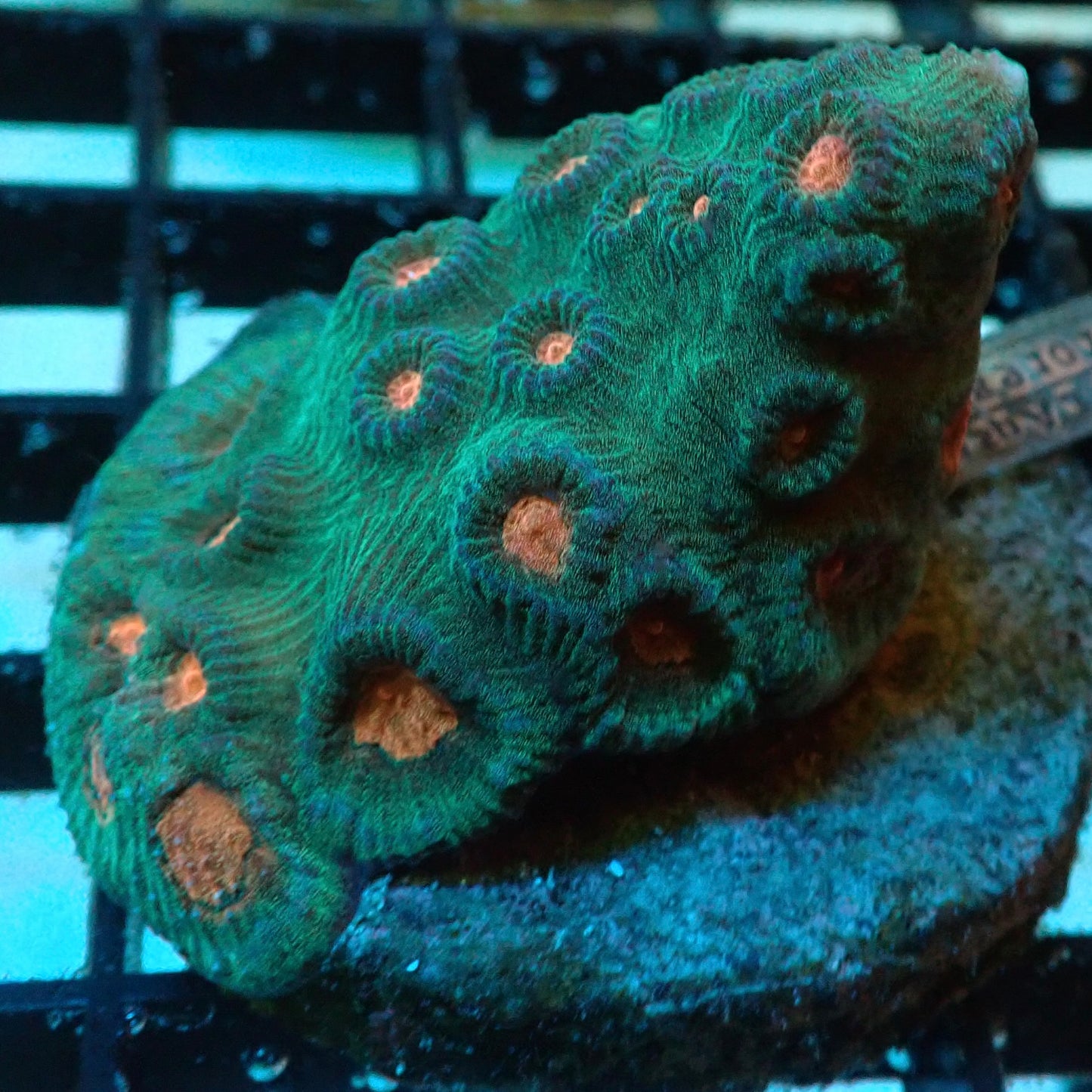

Multi-colour Chalice (Green dominant) is a vibrant chalice with a glowing green base and layered accent colours that can show oranges, reds, yellows, or rainbow highlights depending on lighting and nutrients. Under blue reef lighting it fluoresces strongly and adds bold texture with a plating, encrusting growth form that looks better every month as it spreads outward.
Why we love it
-
Bright green dominant colour with multi-colour highlights under reef lighting
-
Plating, encrusting growth that builds a colourful rim as it spreads
-
Excellent lower-light showpiece frag for mixed reefs
Suggested parameters
-
Temperature: 24–26°C (75–79°F)
-
Salinity: 1.025–1.026 SG
-
pH: 8.1–8.4
-
Alkalinity: 8–9 dKH (keep it stable)
-
Calcium: 420–460 ppm
-
Magnesium: 1300–1400 ppm
-
Nitrate: 5–15 ppm
-
Phosphate: 0.03–0.10 ppm
Care and placement
-
Difficulty: Easy to moderate
-
Placement: Low to mid rockwork with good clearance
-
Lighting: Low to moderate (acclimate slowly if moving higher)
-
Flow: Low to moderate, indirect (enough to keep it clean, not enough to irritate tissue)
Feeding
Not required, but helpful for faster growth and richer colour. Offer mysis, finely chopped seafood, or a quality coral food 1 to 2 times per week. Chalices often respond best after lights dim. Reduce flow while feeding for best results.
Compatibility and spacing
Chalice corals can be aggressive and may send out sweepers at night.
-
Leave 10–15 cm (4–6 in.) of space from other corals (more if you see sweepers)
-
Keep away from delicate SPS tips and fleshy LPS that can be damaged easily
-
Avoid placing where torch or hammer corals can reach it
-
Generally compatible with reef safe fish and inverts, but avoid nippy fish
What you are buying (2 to 3" frag)
This listing is for a 2 to 3 inch frag, meaning you are purchasing one frag sized approximately 2 to 3 inches.
-
You will receive: 1 frag (2 to 3") of Multi-colour Chalice Coral (Green dominant)
-
Mounted on a frag plug or small base (unless otherwise stated)
Colour and growth form can vary by system and may shift during acclimation due to lighting, flow, nutrient levels, and tank maturity.