

Little Shop of Coral
Dispar Anthias (Pseudanthias dispar)
Dispar Anthias (Pseudanthias dispar)
Couldn't load pickup availability
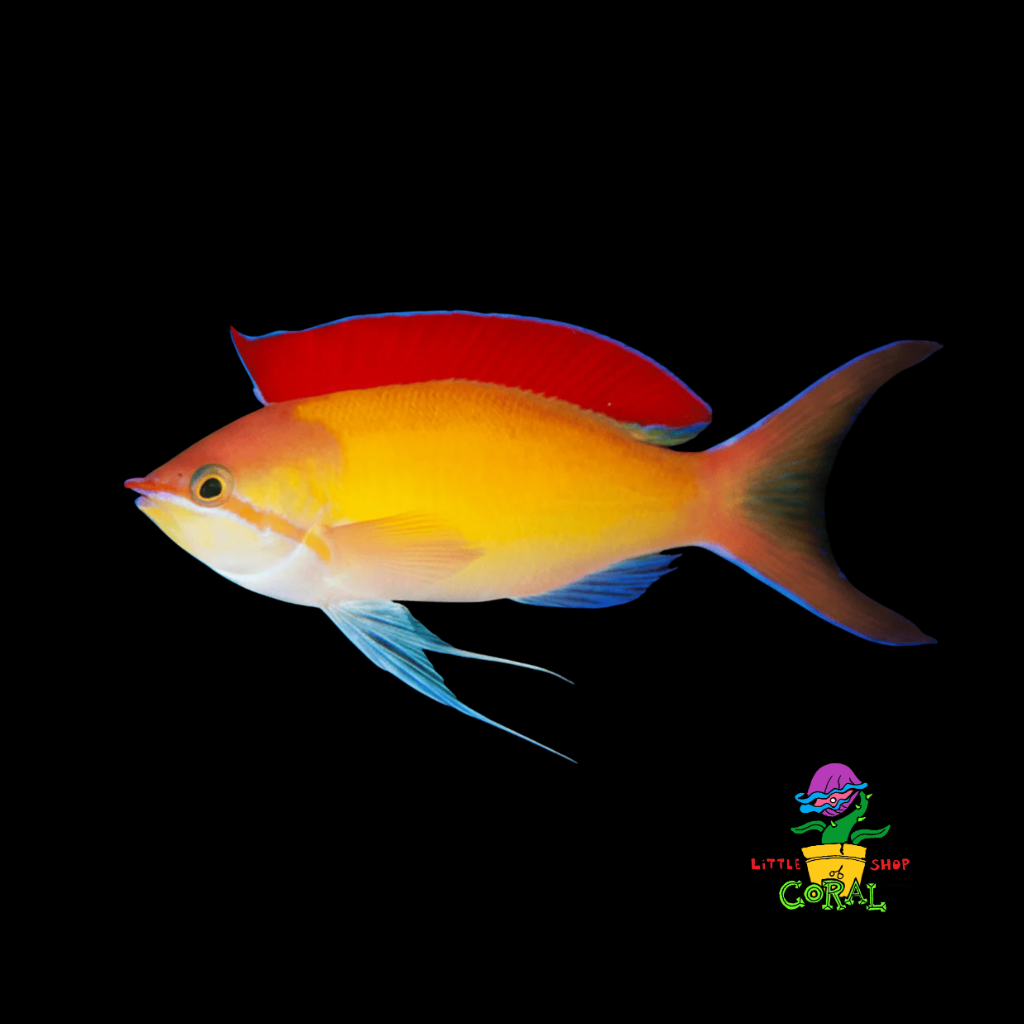
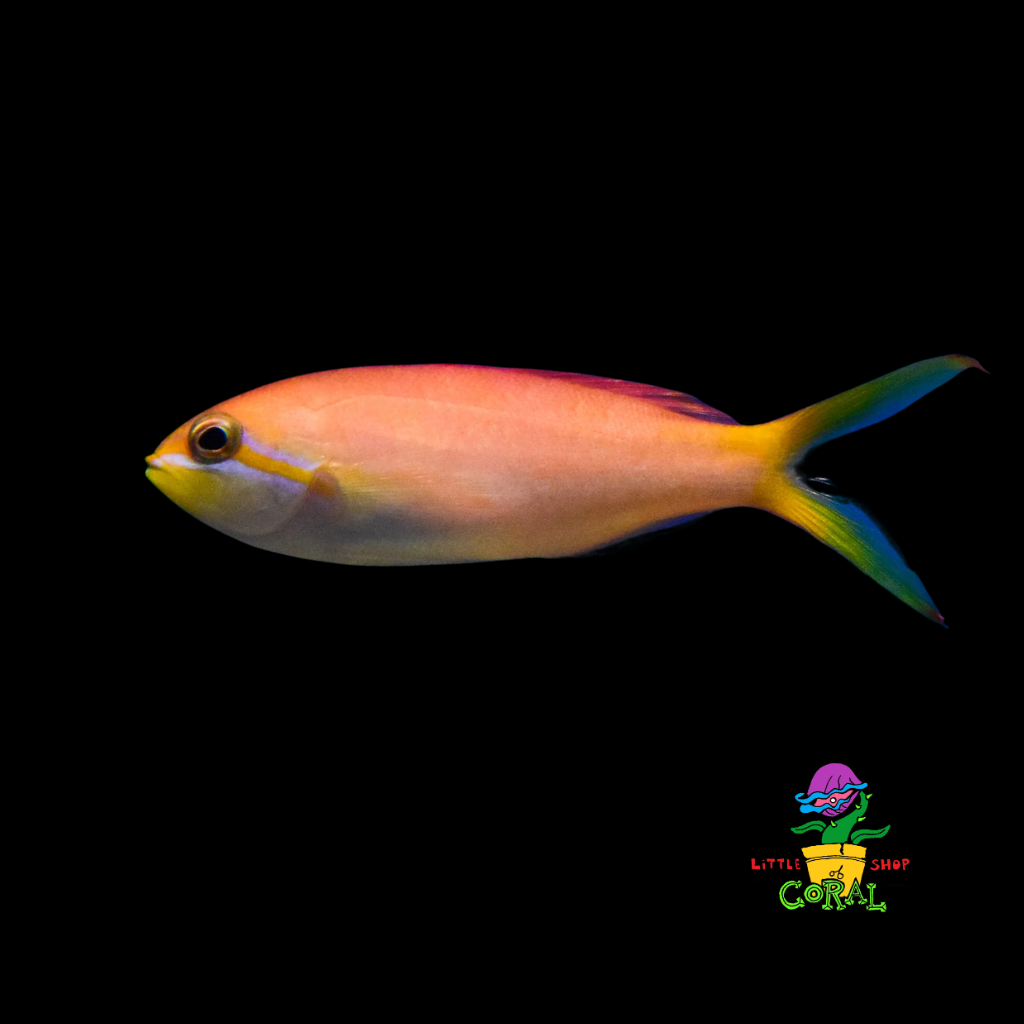
The Dispar Anthias is one of the most accessible and rewarding anthias species available in the hobby, and one of the very few members of the group that genuinely earns the description relatively beginner-friendly, at least compared to the rest of its demanding family. Males display a brilliant orange-red body with a vivid red dorsal fin that intensifies during courtship, while females show a softer peach-orange colour on the upper body fading to pale lavender or white on the underside, making this a species with striking visual appeal across both sexes. Also known as the Peach Anthias and Redfin Anthias, the Dispar is a schooling, open-water planktivore that brings constant movement, vibrant colour, and genuine reef ecosystem energy to any system large enough to house it properly.
Why we love it
- One of the most visually electric schooling fish available for the reef, with males putting on spectacular colour displays during courtship
- One of the smaller and less aggressive anthias species, and among the most tolerant of the higher-intensity lighting required for a healthy reef tank, unlike many deeper-water anthias that struggle under bright light
- All anthias are hermaphroditic; if the dominant male is lost, the largest female in the group will transition to take its place, making group dynamics self-correcting over time
- Fully reef safe with all corals and ornamental invertebrates
- Active, social, and endlessly entertaining; a well-kept school of Dispar Anthias is one of the most dynamic displays in the reef hobby
Suggested parameters
- Temperature: 24 to 26°C (75 to 79°F)
- Salinity: 1.025 to 1.026 SG
- pH: 8.1 to 8.4
- Alkalinity: 8 to 10 dKH
- Calcium: 400 to 450 ppm
- Magnesium: 1250 to 1400 ppm
- Nitrate: 5 to 20 ppm, stable and low is preferred given the high metabolism of this species
- Phosphate: 0.03 to 0.12 ppm
- Strong water flow and high oxygenation are essential; a powerhead or wavemaker replicating the active reef environment this species naturally inhabits is required
Care and temperament
- Difficulty: Moderate
- Temperament: Peaceful toward most tankmates; can show aggression toward conspecifics in smaller groups or smaller tanks; housing in larger numbers with a clear dominant male helps distribute and reduce aggression within the group
- Reef safe: Yes, fully compatible with all corals and invertebrates
- Minimum tank size: 280 litres (75 gallons) for a single specimen or small group; 125 gallons or larger is recommended for a harem of one male with multiple females
- Requires ample open swimming space in the water column alongside sufficient live rock with caves and crevices for shelter; this is an open-water schooling species that needs room to swim freely
- Extremely active with a very high metabolism; water quality must be maintained rigorously through efficient filtration and regular water changes to keep nitrate in check
- A tight-fitting lid is essential; anthias are active and confirmed jumpers
Diet
Feeding is the single most important and demanding aspect of keeping this species successfully. The Dispar Anthias is a dedicated planktivore with a very high metabolic rate and must be fed frequently throughout the day.
- Frozen mysis shrimp (primary staple)
- Vitamin-enriched frozen brine shrimp and enriched artemia
- Frozen copepods and cyclops
- Quality marine pellets and flake foods once trained
- An attached refugium cultivating copepods and amphipods provides a steady supply of live nutritious food between scheduled feedings and is strongly beneficial for keeping this active planktivore content
- Feed three to five small amounts per day; a single large daily feeding is not suitable for this species given its constant activity level and metabolic demands
- Consistent, frequent feeding is non-negotiable; an underfed anthias will waste away quickly
Compatibility and tankmates
- Excellent with clownfish, tangs, gobies, blennies, wrasses, dartfish, and most peaceful reef community fish
- Best kept as a single specimen, a mated pair, or as a harem of one male with multiple females in odd numbers; avoid keeping two males together as extreme aggression will result
- Introduce all individuals in the group simultaneously when possible for the smoothest social outcome
- Avoid large aggressive species such as triggers, dominant angels, or boisterous fish that will stress this active but relatively peaceful species
- Compatible with all ornamental invertebrates, shrimp, and crabs
Health and acclimation notes
Dispar Anthias are delicate during shipping and the acclimation period but become hardy once settled into a stable, well-fed routine. Slow drip acclimation is strongly recommended. Consistent feeding from day one of introduction is critical; an anthias that fails to feed within the first few days of arrival is at serious risk, so having frozen mysis and brine shrimp ready before the fish arrives is essential. Purchasing quarantined specimens that are already accepting prepared foods dramatically improves the odds of long-term success with this species.
What you are buying
- You will receive: 1 Dispar Anthias (Pseudanthias dispar), male or female as available
- Males display a vivid orange-red body with a bright red dorsal fin; females show a softer peach-orange upper body fading to pale lavender or white below
- Size can vary between individuals; maximum size is approximately 9.5 cm (3.7 inches)
A tight-fitting lid is essential, as this species will jump. Slow drip acclimation is strongly recommended, and frequent feeding must begin immediately upon introduction.
Collapsible content
LIGHT
LOW: Place coral at the bottom of the tank. Depending on the type, coral may need to be placed off sand and therefore mounted on a ceramic disc of piece of rock.
MEDIUM: Place coral at mid-range of the tank. Best placed/glued on top of a rock scape at mid-range height.
HIGH: Place coral from mid range to just below water level. SPS coral are shallow growing so they require and are able to tolerate intense light.
FLOW
LOW: Most soft coral do well with a small, gentle pulse. There are certain corals that can even be placed in areas of indirect flow, meaning places aside a rock structure or set into a entrance to a cave style space.
MEDIUM: Many LPS types of coral prefer medium pulse current. Most Euphyllia or corals that have more tissue structure connected to their skeleton, don’t like to be in a high flow area like the direct flow of the wave pump.
HIGH: Similar to high light, SPS enjoy being in some heavy current. Most LPS and SPS that branch encrust or plate prefer high flow that simulates the top water waves.
SKILL
ENTRY: While some may say beginner level, "Entry" is a good term to be used when starting out in the world of corals and marine life. Prior to adding livestock, you want to ensure that your reef has the proper parameters including zero levels of ammonia and nitrite. Seeing traces of nitrate in your waters is a good sign - just keep them at a lower level of 2ppm to 10ppm. Maintaining correct temperature and salinity are a huge factor to stable parameters. Starting to monitor your PH, alkalinity, calcium and magnesium is a great habit to get into to keep a successful reef.
While some soft coral don’t require too much light, having a proper reef light that puts out the proper pars is very important. You'll also want to have a good amount of flow and protected rock areas, as placing corals in their happy spot is ideal for success.
ADVANCED: