

Little Shop of Coral
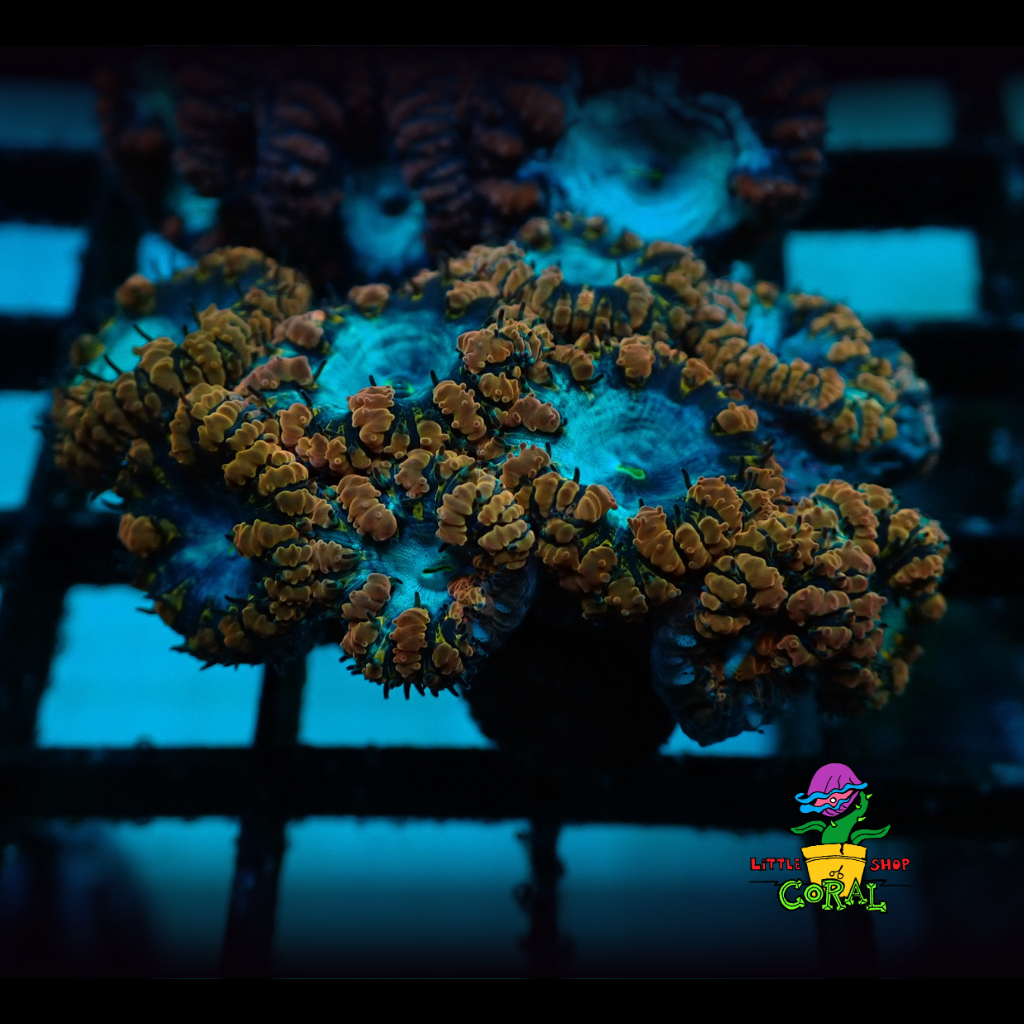
Blue Eye Blasto (Blastomussa wellsi) (A29)
Blue Eye Blasto (Blastomussa wellsi) (A29)
Couldn't load pickup availability
Blastomussa wellsi, or just blasto, is a fleshy LPS with chunky, well spaced polyps and a beginner friendly attitude. The large, fleshy polyps inflate beautifully and tolerate a wide range of conditions, making blastos a great choice for reefers who want big visual impact without high maintenance.
Why we love it
• Big, fleshy polyps that puff up impressively when content
• One of the more forgiving LPS corals available
• Steady growth in stable, mature systems
• Looks great in lower light areas where many LPS struggle
Suggested parameters
• Temperature: 24 to 26°C (75 to 79°F)
• Salinity: 1.025 to 1.026 SG
• pH: 8.1 to 8.4
• Alkalinity: 8 to 10 dKH (stability matters most)
• Calcium: 400 to 450 ppm
• Magnesium: 1250 to 1400 ppm
• Nitrate: 5 to 20 ppm
• Phosphate: 0.03 to 0.12 ppm
Care and placement
• Difficulty: Easy
• Placement: Lower rockwork, sand bed, or shaded ledge
• Lighting: Low to moderate (avoid intense direct light)
• Flow: Low (gentle, indirect flow keeps the tissue happy)
Feeding
Blastos appreciate target feeding but are not as voracious as some other LPS.
• Mysis, brine, or pellet style coral foods
• Target feed once per week, ideally after lights out
• Reduce flow during feeding so polyps can grab the food
Compatibility and spacing
Blastos are peaceful and lack aggressive sweepers, so they need to be protected from more dominant neighbours.
• No significant sweeper tentacles
• Vulnerable to neighbours with strong sweepers (torches, hammers, chalices)
• Leave room for the colony to expand outward
• Reef safe with most fish and inverts
What you are buying
• You will receive: 1 Blasto frag
• Mounted on a frag plug or small tile
• For WYSIWYG listings: you will receive the exact frag shown. For non WYSIWYG listings: the frag will be similar to those pictured but each piece is unique.
Colour, pattern, and polyp size can vary between systems and may shift slightly during acclimation due to lighting, flow, and nutrient levels.
Collapsible content
LIGHT
LOW: Place coral at the bottom of the tank. Depending on the type, coral may need to be placed off sand and therefore mounted on a ceramic disc of piece of rock.
MEDIUM: Place coral at mid-range of the tank. Best placed/glued on top of a rock scape at mid-range height.
HIGH: Place coral from mid range to just below water level. SPS coral are shallow growing so they require and are able to tolerate intense light.
FLOW
LOW: Most soft coral do well with a small, gentle pulse. There are certain corals that can even be placed in areas of indirect flow, meaning places aside a rock structure or set into a entrance to a cave style space.
MEDIUM: Many LPS types of coral prefer medium pulse current. Most Euphyllia or corals that have more tissue structure connected to their skeleton, don’t like to be in a high flow area like the direct flow of the wave pump.
HIGH: Similar to high light, SPS enjoy being in some heavy current. Most LPS and SPS that branch encrust or plate prefer high flow that simulates the top water waves.
SKILL
ENTRY: While some may say beginner level, "Entry" is a good term to be used when starting out in the world of corals and marine life. Prior to adding livestock, you want to ensure that your reef has the proper parameters including zero levels of ammonia and nitrite. Seeing traces of nitrate in your waters is a good sign - just keep them at a lower level of 2ppm to 10ppm. Maintaining correct temperature and salinity are a huge factor to stable parameters. Starting to monitor your PH, alkalinity, calcium and magnesium is a great habit to get into to keep a successful reef.
While some soft coral don’t require too much light, having a proper reef light that puts out the proper pars is very important. You'll also want to have a good amount of flow and protected rock areas, as placing corals in their happy spot is ideal for success.
ADVANCED: