

Little Shop of Coral
Bicolour Blenny (Ecsenius bicolor / Ecsenius pulcher)
Bicolour Blenny (Ecsenius bicolor / Ecsenius pulcher)
Couldn't load pickup availability
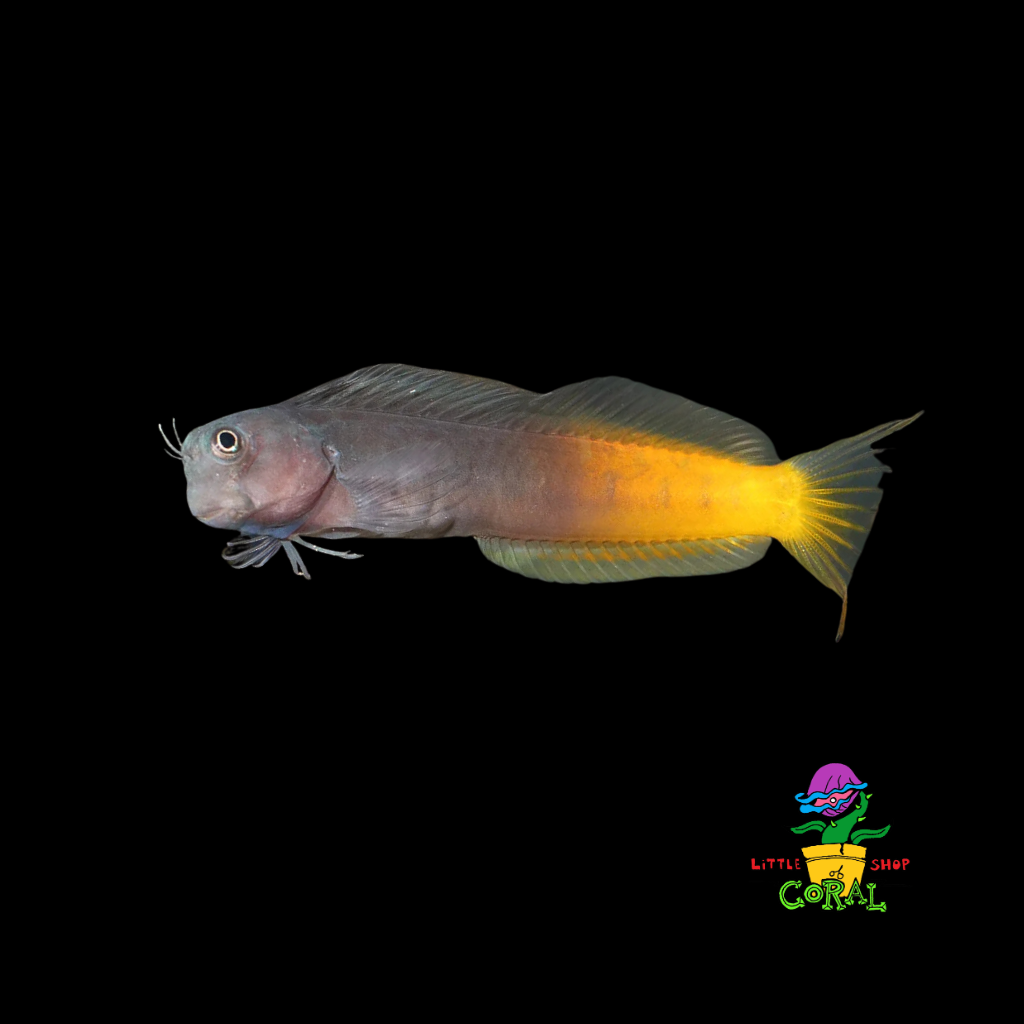
The Bicolour Blenny is one of the most charming and functional reef fish available in the hobby. With a clear dividing line down the middle, the front half ranges from brown to blue while the back half transitions into a bright orange-yellow, giving this little fish a look that genuinely earns its common name. Ecsenius pulcher, the closely related Elegant Blenny, shares the same split-colour concept with a slightly deeper, more vivid variation on the theme and identical care requirements. Both species bring the same winning combination: a bold personality, a fondness for perching out in the open where everyone can see them, and a genuine appetite for nuisance algae that makes them pull their weight in any reef system.
Why we love it
- Striking two-tone colouration that stands out beautifully against reef rockwork
- Active, curious personality that quickly becomes a favourite in any tank
- Natural algae grazer that helps keep rockwork clean between maintenance sessions
- Hardy and beginner friendly; one of the most approachable marine fish in the hobby
- Endlessly entertaining perching and hopping behaviour throughout the aquascape
Suggested parameters
- Temperature: 24 to 26°C (75 to 79°F)
- Salinity: 1.025 to 1.026 SG
- pH: 8.1 to 8.4
- Alkalinity: 8 to 10 dKH
- Calcium: 400 to 450 ppm
- Magnesium: 1250 to 1400 ppm
- Nitrate: 5 to 20 ppm
- Phosphate: 0.03 to 0.12 ppm
Care and temperament
- Difficulty: Easy
- Temperament: Peaceful toward most tankmates; territorial toward other blennies and similarly shaped fish
- Reef safe: Yes, with the note that occasional nipping at LPS corals or clam mantles may occur if the fish is underfed, but this behaviour typically stops with adequate feeding
- Minimum tank size: 30 gallons with plenty of live rock
- A mature, established tank with a healthy crop of algae already growing on the rockwork is strongly preferred; in a new sterile system without a functional ecosystem a bicolour blenny can struggle to find enough to eat
- A tight-fitting lid is absolutely essential; these fish have strong flight reflexes and are confirmed jumpers
Diet
The Bicolour Blenny is primarily herbivorous and algae access is the foundation of its health.
- Naturally grazes algae from live rock and tank surfaces throughout the day
- Nori and dried seaweed sheets on a clip
- Spirulina-based pellets and flakes
- Frozen herbivore blends
- Frozen mysis shrimp, brine shrimp, and finely chopped krill are also accepted as supplemental meaty foods
- If algae growth in the tank is insufficient, more frequent feeding and algae-rich supplemental foods such as spirulina are essential
- Feed twice daily; keeping this fish well fed is the single most important factor in preventing any territorial or coral-nipping behaviour
Compatibility and tankmates
- Excellent with clownfish, small wrasses, dartfish, shrimp gobies, and most peaceful reef community fish
- Can be territorial toward other blennies, small gobies, dartfish, and fish with similar body shapes or colour patterns such as Royal Grammas and Bicolour Pseudochromis
- Keep only one per system unless a confirmed mated pair in a larger tank
- Aggressive species like triggers, large puffers, or groupers will stress or potentially eat a bicolour blenny and should be avoided
- Generally ignores shrimp, snails, and other ornamental invertebrates
Health and acclimation notes
The Bicolour Blenny is one of the hardiest and most forgiving marine fish available, making it an excellent choice for intermediate and experienced hobbyists alike. A drip acclimation of around an hour is recommended, and the fish should not be introduced to a tank without sufficient algae growth for it to graze on between meals. Ensure rockwork is stable and well-supported, as bicolour blennies are active diggers and will frequently move rubble, sand, and small debris around the base of the aquascape.
What you are buying
- You will receive: 1 Bicolour Blenny (Ecsenius bicolor or Ecsenius pulcher)
- Specific species and colour intensity can vary between individuals; both species share identical care requirements
- Males are generally larger than females and can display colour shifts including blue during breeding condition
Slow acclimation is recommended. A tight-fitting lid is essential, as this species will jump.
Collapsible content
LIGHT
LOW: Place coral at the bottom of the tank. Depending on the type, coral may need to be placed off sand and therefore mounted on a ceramic disc of piece of rock.
MEDIUM: Place coral at mid-range of the tank. Best placed/glued on top of a rock scape at mid-range height.
HIGH: Place coral from mid range to just below water level. SPS coral are shallow growing so they require and are able to tolerate intense light.
FLOW
LOW: Most soft coral do well with a small, gentle pulse. There are certain corals that can even be placed in areas of indirect flow, meaning places aside a rock structure or set into a entrance to a cave style space.
MEDIUM: Many LPS types of coral prefer medium pulse current. Most Euphyllia or corals that have more tissue structure connected to their skeleton, don’t like to be in a high flow area like the direct flow of the wave pump.
HIGH: Similar to high light, SPS enjoy being in some heavy current. Most LPS and SPS that branch encrust or plate prefer high flow that simulates the top water waves.
SKILL
ENTRY: While some may say beginner level, "Entry" is a good term to be used when starting out in the world of corals and marine life. Prior to adding livestock, you want to ensure that your reef has the proper parameters including zero levels of ammonia and nitrite. Seeing traces of nitrate in your waters is a good sign - just keep them at a lower level of 2ppm to 10ppm. Maintaining correct temperature and salinity are a huge factor to stable parameters. Starting to monitor your PH, alkalinity, calcium and magnesium is a great habit to get into to keep a successful reef.
While some soft coral don’t require too much light, having a proper reef light that puts out the proper pars is very important. You'll also want to have a good amount of flow and protected rock areas, as placing corals in their happy spot is ideal for success.
ADVANCED: