
Little Shop of Coral
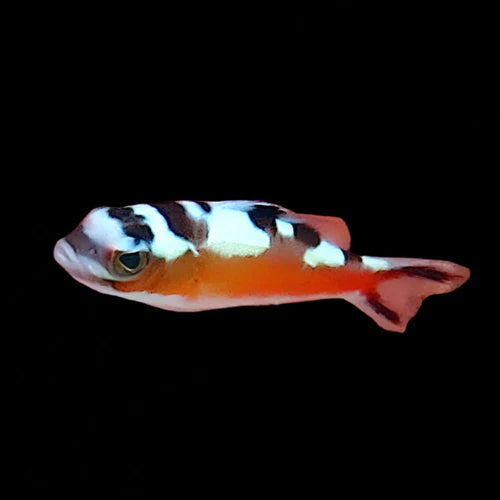
Basslet Tobacco ( Serranus Tabacarius)
Basslet Tobacco ( Serranus Tabacarius)
Couldn't load pickup availability
Tobacco Basslet (Serranus tabacarius)
The Tobacco Basslet is a beautiful underrated Caribbean reef fish that has subtle earthy colours with an outgoing personality. Its body show’s a warm bronze, tan, and reddish-brown tones with iridescent blue markings around the face and fins. Unlike many basslets that spend much of their time hidden, the Tobacco Basslet is an active swimmer that swins around rockwork, often perching in the open while watching its surroundings. Hardy, adaptable, and relatively peaceful, it makes an excellent addition to established reef aquariums.
Why we love it
-
Unique bronze and tobacco-coloured body with subtle blue facial highlights that shimmer under reef lighting
-
Active and visible throughout the day, frequently hovering around caves and rockwork
-
Hardy and adaptable once established, making it suitable for most intermediate reef hobbyists
-
Excellent alternative to more common basslet species
-
Helps control small nuisance crustaceans and unwanted hitchhikers while adding personality to the aquarium
Suggested parameters
-
Temperature: 24–26°C (75–79°F)
-
Salinity: 1.025–1.026 SG
-
pH: 8.1–8.4
-
Alkalinity: 8–10 dKH
-
Calcium: 400–450 ppm
-
Magnesium: 1250–1400 ppm
-
Nitrate: 2–20 ppm
-
Phosphate: 0.03–0.10 ppm
Care and temperament
-
Difficulty: Easy to Moderate
-
Temperament: Semi-peaceful
-
Reef safe: Yes; completely safe with corals and generally safe with ornamental invertebrates
-
Minimum tank size: 30 gallons (115 litres)
-
Provide plenty of live rock with caves, overhangs, and crevices for security and territory establishment
-
Best kept singly unless housed in a very large aquarium with ample rockwork
-
May become territorial toward other basslets, small groupers, dottybacks, or fish with a similar body shape
-
Can coexist well with most peaceful to semi-aggressive reef fish when introduced appropriately
-
A secure lid is recommended, as basslets may jump if startled
Diet
The Tobacco Basslet is a carnivore with a healthy appetite and readily accepts a variety of prepared foods.
-
Frozen mysis shrimp
-
Enriched brine shrimp
-
Chopped krill
-
High-quality marine pellets
-
Quality marine flakes as a supplemental food
-
Feed 1–2 times daily with a varied diet to maintain vibrant colouration and long-term health
Compatibility and tankmates
-
Excellent with clownfish, gobies, blennies, cardinalfish, fairy wrasses, flasher wrasses, anthias, and tangs
-
Compatible with dwarf angelfish and most peaceful reef species
-
Generally ignores corals, shrimp, snails, crabs, and other larger ornamental invertebrates
-
Avoid housing with aggressive dottybacks, large hawkfish, triggers, lionfish, or predatory groupers
-
Avoid mixing with other basslets or similarly shaped territorial fish unless the aquarium is sufficiently large
Health and acclimation notes
The Tobacco Basslet is a hardy species that adapts well to aquarium life when properly acclimated. Slow drip acclimation over 45–60 minutes is recommended to minimize stress. Newly introduced fish may remain hidden for the first several days while becoming comfortable in their new surroundings. Offering frozen meaty foods shortly after introduction usually encourages feeding, and most begin accepting prepared foods quickly. Stable water quality and plenty of rockwork greatly improve long-term success.
What you are buying
You will receive: 1 Tobacco Basslet (Serranus tabacarius)
Colouration ranges from warm bronze and tan to reddish-brown with iridescent blue markings around the face and fins. Natural variation in colour intensity and pattern should be expected between individuals. Size and coloration may vary depending on age and collection location.
A mature aquarium with stable water parameters and a lot live rock is recommended. Slow drip acclimation is strongly encouraged before introduction. Once established, the Tobacco Basslet becomes an active, hardy, and rewarding addition to almost any peaceful reef aquarium.
Collapsible content
LIGHT
LOW: Place coral at the bottom of the tank. Depending on the type, coral may need to be placed off sand and therefore mounted on a ceramic disc of piece of rock.
MEDIUM: Place coral at mid-range of the tank. Best placed/glued on top of a rock scape at mid-range height.
HIGH: Place coral from mid range to just below water level. SPS coral are shallow growing so they require and are able to tolerate intense light.
FLOW
LOW: Most soft coral do well with a small, gentle pulse. There are certain corals that can even be placed in areas of indirect flow, meaning places aside a rock structure or set into a entrance to a cave style space.
MEDIUM: Many LPS types of coral prefer medium pulse current. Most Euphyllia or corals that have more tissue structure connected to their skeleton, don’t like to be in a high flow area like the direct flow of the wave pump.
HIGH: Similar to high light, SPS enjoy being in some heavy current. Most LPS and SPS that branch encrust or plate prefer high flow that simulates the top water waves.
SKILL
ENTRY: While some may say beginner level, "Entry" is a good term to be used when starting out in the world of corals and marine life. Prior to adding livestock, you want to ensure that your reef has the proper parameters including zero levels of ammonia and nitrite. Seeing traces of nitrate in your waters is a good sign - just keep them at a lower level of 2ppm to 10ppm. Maintaining correct temperature and salinity are a huge factor to stable parameters. Starting to monitor your PH, alkalinity, calcium and magnesium is a great habit to get into to keep a successful reef.
While some soft coral don’t require too much light, having a proper reef light that puts out the proper pars is very important. You'll also want to have a good amount of flow and protected rock areas, as placing corals in their happy spot is ideal for success.
ADVANCED: